If you’ve ever walked the line between waste management efficiency and sustainable energy production, you’ve likely encountered briquetting machines. As a supplier who’s worked alongside these systems for over a decade, I’ve fielded hundreds of calls, emails, and on-site visits from farmers, manufacturing plant managers, and waste facility operators all asking: Are briquetting machines worth the investment? Briquetting Machine

The short answer? They absolutely are—for the right user with the right operational context. But here’s the part most sales materials won’t tell you: briquetting machines aren’t a one-size-fits-all solution, and their downsides can turn a promising ROI into a costly headache if you don’t plan for them. Let’s cut through the marketing hype and talk about the real, often underdiscussed disadvantages of these systems, straight from someone who sees the good and the bad of them every day.
High Upfront and Maintenance Costs That Catch New Operators Off Guard
Let’s start with the hard numbers, because that’s what usually sinks the first-time buyer’s plan. A quality industrial briquetting machine—one that can process agricultural waste, wood chips, or municipal solid waste briquettes at a consistent rate—doesn’t come cheap. For a standard model that handles 500 to 1,000 kilograms of raw material per hour, you’re looking at an initial investment of between $15,000 and $60,000, depending on pressure capacity, automation features, and material compatibility. Smaller, tabletop models for home use or small community groups are cheaper, but those produce less than 50 kilograms per hour, making them impractical for most commercial or mid-scale operations.
What many first-time buyers miss is that this upfront cost is just the tip of the iceberg. Briquetting machines rely on heavy, moving parts—ram pumps, die heads, rollers, and hydraulic systems—that experience extreme friction and pressure during operation. Even with regular servicing, parts wear out fast, and replacement isn’t cheap. A single die head for a high-capacity machine can run $2,000 to $5,000, and if you don’t source genuine, manufacturer-approved parts, you risk misalignment that leads to even more breakdowns.
Maintenance isn’t just parts, either. These machines need consistent, calibrated servicing to run at peak efficiency. For example, a hydraulic system that’s underfilled or has contaminated fluid can drop briquette density by 20% or more, while unlubricated rollers can cause uneven wear that forces a full machine shutdown. For operators without an in-house maintenance team, this means either paying a technician $100 to $200 per hour for emergency repairs or training staff in-house—an added time and labor cost that most new operators don’t factor into their ROI calculations.
Strict Raw Material Requirements That Limit Flexibility
One of the biggest misconceptions about briquetting machines is that they can process any kind of waste. The reality is far more restrictive, and this is a disadvantage that has derailed more projects than I can count. Briquetting works by compressing raw material at extremely high pressure (often 50 to 100 MPa for most systems) to bind it together, but that only works if the raw material has the right properties.
First, moisture content is non-negotiable. Most briquetting machines require raw material to have a moisture level between 8% and 12% to produce solid, durable briquettes. If the material is too wet—say, fresh grass clippings or uncomposted food waste—compressing it will result in soft, crumbly briquettes that fall apart when transported or burned. Too dry, like completely dried wood sawdust, and the material won’t bind at all, even with pressure. That means operators have to invest in separate drying equipment to get raw material to the right moisture level, adding thousands more to their total setup cost.
Raw material also has to be of consistent size and composition. A machine set to handle 2 cm wood chips will choke if you feed it a mix of 5 cm twigs and fine sawdust, or if it gets mixed with non-compressible materials like rocks, metal, or plastic. I once worked with a small sawmill owner who bought a used briquetting machine without checking its die specifications; he tried to process a mix of sawdust and bark, and the bark’s fibrous texture clogged the die within a week, costing him $3,000 in repairs and a week of lost production.
Even if you get the moisture and size right, if your raw material is too high in lignin or too low in natural binders, you may have to add external adhesives like starch or molasses. These add to per-unit production costs, and they can make the briquettes less environmentally friendly—a huge downside if your goal is to market them as a 100% green alternative to coal or wood.
High Energy Consumption That Erodes Profit Margins
Briquetting isn’t a low-energy process, and that’s a critical disadvantage for operators working on thin margins. Most industrial briquetting machines rely on hydraulic systems or diesel-powered motors to generate the extreme pressure needed to compress raw material. A 1,000 kg per hour briquetting machine can use anywhere from 20 to 50 kWh of electricity per hour, or if it’s diesel-powered, up to 5 liters of fuel per hour. For a machine running 12 hours a day, that adds up to $50 to $150 in energy costs alone per day, depending on local utility or fuel prices.
What makes this even more impactful is that the energy cost of producing briquettes can often be higher than the energy value of the briquettes themselves, especially for smaller operations. For example, a 1 kg briquette made from wood waste contains roughly 4 kWh of energy, but producing that briquette can take 1 to 2 kWh of energy, leaving a net gain of just 2 to 3 kWh. For larger, commercial-scale operations that process thousands of kilograms per month, the net energy gain is positive, but for small-scale users, the energy cost can make briquetting unprofitable.
I’ve seen operators try to offset this by powering their machines with on-site solar or biomass, but that requires additional infrastructure—solar panels, inverters, a backup generator—which adds even more upfront cost. For operators who don’t have access to cheap, renewable energy, high energy consumption quickly turns briquetting from a sustainable practice into a financially burdensome one.
Space and Operational Limitations for Medium-Sized Facilities
If you’re working in a crowded urban area or a small manufacturing lot, the physical footprint of a briquetting machine can be a major disadvantage. High-capacity industrial briquetting machines aren’t small—they take up anywhere from 10 to 30 square meters of floor space, not including the space needed for raw material storage, drying equipment, finished briquette storage, and maintenance access. For a small 500 square meter manufacturing plant, that’s 5% to 10% of their total usable space taken up by a single piece of equipment.
Then there’s the noise and dust problem. Briquetting machines generate significant noise—often 85 to 100 decibels during operation, which is equivalent to the noise of a lawnmower or a busy traffic line. That means you’ll need to invest in soundproofing for the machine, or require workers to wear hearing protection, adding to operational costs. The process also creates fine particulate dust from raw material processing, which is a health hazard for workers and can violate local air quality regulations. Operators have to install dust collection systems, which add another $1,000 to $5,000 to setup costs, and regular maintenance to keep those systems working.
Market and Regulatory Barriers That Limit Demand
Even if you overcome all the operational downsides, there’s a final, often overlooked disadvantage: the market for briquettes is not as universal as manufacturers claim. Briquettes are primarily used as a fuel source for heating, cooking, and small-scale industrial boilers, but demand varies wildly by region. In parts of Europe and North America, there’s growing demand for sustainable biomass briquettes as a replacement for coal in power plants, but in many developing countries, access to this market is limited by transportation costs, and local consumers often prefer traditional firewood or coal that’s cheaper and more familiar.
Regulatory barriers add another layer of complexity. Many countries have strict emissions standards for solid fuel, and poorly made briquettes that burn too hot or release high levels of particulate matter can fail emissions tests. For example, in the European Union, briquettes used in commercial boilers must meet strict ENplus or DINplus standards, which require regular testing and certification—costs that small operators can rarely afford. Even if you make high-quality briquettes, transporting them long distances to reach buyers adds to the overall cost, eroding profit margins.
What This Means for You, Straight From a Supplier
At the end of the day, these disadvantages aren’t reasons to avoid briquetting machines—they’re reasons to approach the investment with your eyes open. Over the years, I’ve seen operations succeed with briquetting machines when they plan for these downsides: they budget for maintenance and replacement parts, test their raw material to ensure it meets moisture and size requirements, calculate energy costs upfront, and research local market demand for briquettes before making a purchase.
For example, a mid-scale agricultural operation in the Midwest that processes corn stover and wheat straw can offset their costs by selling briquettes to local small businesses that use biomass for heating. A waste management facility in Europe can use government subsidies for sustainable waste management to cover upfront costs and regulatory testing.
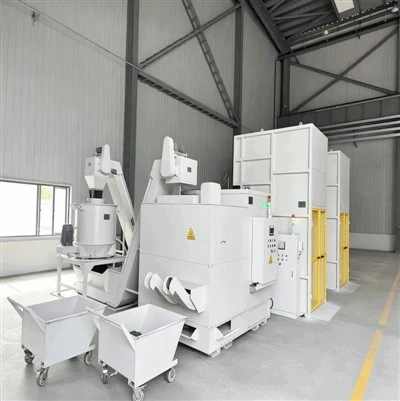
But if you’re a small operator with limited space, no access to cheap energy, or no clear market for your briquettes, a briquetting machine might not be the right investment right now. That’s why I always take the time to walk potential clients through these points, not just sell them a machine. My job isn’t to make a quick sale—it’s to help them make a decision that works for their operations, whether that’s a small tabletop model for a community project or a high-capacity industrial system for a large waste facility.
Chips Processing If you’re considering investing in a briquetting machine and want to talk through your specific needs, raw material type, space constraints, or market opportunities, I’m here to help. We can walk through your operational goals, review machine options that fit your budget, and discuss ways to mitigate the downsides I’ve outlined here. Don’t hesitate to reach out—let’s build a solution that works for you.
References
- World Bank. (2019). Biomass Briquetting: Opportunities and Challenges for Sustainable Waste Management. Washington, DC: World Bank Group.
- International Energy Agency. (2021). Bioenergy for Heat and Power: Technology Roadmap. Paris: IEA.
- Food and Agriculture Organization of the United Nations. (2020). Small-Scale Briquetting of Agricultural Residues: A Guide for Practitioners. Rome: FAO.
- European Committee for Standardization. (2018). Solid Biofuels—Definitions and Classification of Wood Pellets and Briquettes (ENplus M, DINplus C). Brussels: CEN.
Yantai Amho Machinery Co., Ltd.
Yantai Amho Machinery Co., Ltd. is one of the most experienced briquetting machine manufacturers and suppliers in China. We have world-leading production equipment and strong manufacturing capabilities. Please rest assured to buy advanced briquetting machine at competitive price from our factory.
Address: 201 SOUTH BUILDING, NO.3 SHIXUE ROAD, ZHIFU DISTRICT, YANTAI, CHINA.
E-mail: richard@amho.com.cn
WebSite: https://www.amhomachinery.com/
