Hey there, let’s cut to the chase: if you’ve ever bitten into a crispy cheese puff, a chewy plant-based protein bar, a crunchy corn tortilla chip, or even a breakfast cereal that puffs up like little golden clouds, you’ve encountered magic made by a food extruder machine. I’ve been supplying these bad boys for over a decade, and honestly? Most folks I chat with—whether they’re startup founders testing their first snack line or big brand ops managers scaling production—have no clue how these machines actually work beyond “it pushes food stuff out.” Spoiler: it’s way more complex (and impressive) than just shoving dough through a hole. Today, I’m breaking this down like I’d explain it to my cousin who’s starting a small bakery—no jargon, no confusing textbook tangents, just real, hands-on insight from someone who stands next to these machines every single day. Food Extruder Machine
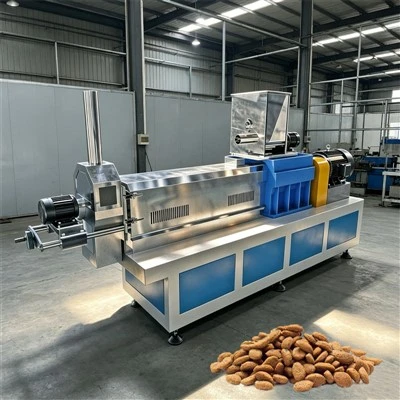
First, let’s start with why extruders are the backbone of so much food production now. Before we got these, making uniform snacks or processed foods that held their shape, texture, and flavor consistently? It was a nightmare. You’d bake different batches and some would be too soft, some too hard, some would just fall apart. Extruders changed that because they control every variable—temperature, pressure, speed, ingredient mix—down to the second. And for us suppliers? That’s the whole point: we don’t just sell metal boxes that push food; we sell tools that let your recipe work exactly how you want it, every time.
Let’s walk through the process step by step, from the second you dump raw ingredients into the hopper to the second your final product comes out the other end. No, skip the boring assembly line basics—we’re going in on the actual mechanics that make this stuff tick.
First up: the hopper. That’s the big, open (usually funnel-shaped) bin at the top of the machine. It’s where you load all your dry and wet ingredients, right? Wait—hold on, not just dumping everything in a pile. Good operators will pre-mix dry ingredients first (flour, cornmeal, protein powder, salt, seasonings) and then add wet ones (water, oil, melted fats, even small amounts of flavorings like cheese powder) to get a consistent, crumbly mix before it hits the hopper. Why? If you dump a big clump of dry flour and a glob of oil in together, that’s a surefire way to clog the machine, trust me. I’ve seen startups waste a whole batch of gourmet mac and cheese mix because they skipped that pre-mix step—total rookie move. The hopper’s job is just to hold that pre-mixed feed and feed it evenly down into the next part: the feed screw.
Now, the feed screw (or twin screws, if we’re talking commercial-grade extruders like the ones we supply, not the tiny countertop ones for home use) is the workhorse. Think of it like a really powerful, threaded screw that spins inside a metal barrel. As it turns, it drags the feed mix down the barrel, applying pressure as it goes. Here’s the key thing about twin screws vs single screw: twin screws mesh together, kind of like two gears turning side by side. That means they mix the ingredients way better, handle sticky or high-protein mixes without clogging, and can generate way more pressure—perfect for things like plant-based meat or crispy snacks that need to expand fast. Single screws are cheaper, but they’re only good for simple, low-moisture stuff like plain cornmeal; you won’t find those in any big production facility that cares about quality.
Next, the barrel itself is where all the action happens. It’s not just a hollow pipe—most commercial extruder barrels have segmented heating and cooling zones, right? The screw is spinning, pushing the mix through, and as it moves, friction from the screw and barrel generates heat. But operators can adjust external heating elements or cooling jackets to fine-tune the temperature at every section of the barrel. This is make-or-break for texture. For example, if you’re making cheese puffs: in the first zones, you heat the mix to gelatinize the starches (that’s what makes them stretchy and hold shape). Then, as it moves toward the end of the barrel, you crank up the heat super high—like 300-400°F—to cook the mix completely. No raw flour taste, and that high heat also builds more pressure inside the barrel. By the time the mix gets to the die plate at the end, you’ve got a thick, molten, uniformly mixed paste that’s ready to come out.
Wait, the die plate! That’s the part everyone cares about, because it’s where the shape is decided. The die is a flat metal plate with tiny, shaped holes—think of it like a cookie cutter, but way smaller and more precise. If you want round cheese puffs, you use a die with round holes. If you want pasta shapes like fusilli, you use a die with those little twisted holes. And here’s the cool part: right when the molten paste squeezes through the die holes, the pressure that’s been building up inside the barrel is suddenly released. That’s called “flash expansion.” For things like corn puffs, the steam trapped in the paste instantly puffs up, creating that light, crispy texture you love. For pasta, the expansion is minor, so it keeps the shape of the die hole perfectly. For chewy snacks like protein bars, you dial back the pressure a little so it doesn’t expand too much, just holds a firm, uniform shape.
Once the paste is out of the die, it’s called “extrudate,” and now you have to cut it into the right size. That’s where the cutter comes in—usually a rotating blade (or multiple blades) right next to the die plate, spinning at a precise speed. The faster the blade spins, the smaller each piece is; slower spin, bigger pieces. Some extruders even have cooling tunnels right after the cutter, depending on the product. For example, if you’re making crispy tortilla chips, you might send the cut extrudate through a fryer or an oven right away to set the texture. For something like a breakfast cereal, it goes through a toasting oven to make it crunchy and add flavor.
But let’s be real—this process doesn’t work 100% of the time for everyone. I’ve had so many clients reach out saying, “My extruder is making lumpy snacks” or “The shape is all messed up” and it’s almost never the machine. It’s the ingredient mix, or the temperature setting, or the speed of the screw. That’s why when we sell these machines, we don’t just drop off the unit and leave. We send our techs to your facility to test your recipe, adjust the settings, train your team, so you’re not left googling “why is my extruder clogging” at 2 a.m. That’s the difference between a random machine and a solution that works for your business.
Let’s talk about the different types of food extruders, just so you know what’s out there (since I supply most of the common ones). First, there’s dry extruders vs wet extruders. Dry extruders are for stuff with low moisture, like cornmeal or rice flour—they use friction heat to cook the mix, so you don’t need to add a lot of water. Wet extruders are for higher moisture mixes, like batter for batter bits or dough for pasta, and they use more external heating. Then there’s twin-screw vs single-screw, like I mentioned earlier: twin-screw is the workhorse for most mid to large-scale operations because of its versatility. We also have specialized extruders for plant-based meat (they’re designed to get that fibrous, meat-like texture by aligning proteins), pet food (they can handle dense, nutrient-heavy mixes), and even nutritional bars.
Wait, let’s clear up a common myth a lot of people have: extruders don’t “process food so much that it’s bad for you.” In fact, the high heat and pressure used in extrusion actually kills any harmful bacteria in the raw ingredients, which is a big safety win. And when done right, it locks in nutrients—like protein or vitamins—so they don’t get lost in cooking. Of course, if you’re adding a ton of salt or sugar, that’s up to your recipe, but the machine itself is neutral. It’s just a tool.
Now, why does this matter for your business? Whether you’re a small brand looking to launch a new line of gluten-free snacks or a big corporation scaling production, the right extruder machine is non-negotiable. The last thing you want is inconsistent product that makes customers stop buying, or a machine that breaks down every other week. That’s why we’ve designed our extruders with easy-to-clean parts (no hidden crevices that get clogged with old dough), precise digital controls so you can save your favorite recipe settings, and durable parts that don’t wear out fast.
Here’s the thing: I started in this industry because I saw a friend’s snack brand go under because their old extruder couldn’t keep up with demand. They’d make a great product, but batches would be uneven, so retailers wouldn’t reorder. So I set out to supply extruders that are reliable, flexible, and actually work with your recipe, not against it. That’s not a sales pitch—it’s just what I do every day.
If you’re tired of troubleshooting clogs, inconsistent texture, or machines that don’t grow with your business, let’s chat. We can walk through your product idea, suggest the right type of extruder, and make sure it’s set up to work exactly for your needs. No pressure, no hidden fees, just straight talk about what will help your product succeed.
Now, quick note for anyone who’s curious: this process has been around for decades, but the modern food extruder as we know it got a big upgrade in the 1950s when the snack food industry boomed. Since then, the tech has gotten way more precise, with digital controls instead of manual dials, and designs that handle more specialized ingredients like plant-based proteins and gluten-free mixes. We reference a lot of industry research on food processing tech when refining our machines, but the core of how the extruder works hasn’t changed that much—it’s just gotten better at adapting to new products.

If you’re ready to talk about getting an extruder for your facility, just reach out. We can answer any questions you have, from setup to maintenance to adjusting settings for your specific recipe. No awkward sales calls, no confusing fine print—just people who know this stuff inside and out, ready to help your business grow.
Hot Air Drying Machine References
- Food Engineering Magazine. (2022). "Extrusion Technology for Modern Food Applications." Industry Technical Report.
- Harper, J. M. (1981). Extrusion Processing of Foods and Feeds. American Association of Cereal Chemists.
- International Organization for Standardization (ISO). (2019). "Food Processing Machinery – Extruders – Safety and Hygiene Requirements." ISO 16648:2019.
Jinan Bright Machinery Co., Ltd
As one of the most professional food extruder machine manufacturers and suppliers in China, we’re featured by quality products and good price. Please rest assured to buy advanced food extruder machine for sale here from our factory. Contact us for more details.
Address: South Zone, Wande Industrial Park, Changqing District, Jinan City, Shandong Province
E-mail: admin@dingrunmachine.com
WebSite: https://www.chinafeedmachine.com/
