If you’ve ever stood in a switching room during a storm, watching a circuit breaker snap open with a sharp crack as power lines lash with wind, you’ve witnessed a circuit breaker’s most critical job: not just cutting power, but killing the arc that tries to survive every interruption. For years, as a circuit breaker supplier, I’ve talked to electricians, plant managers, and system designers who assume a breaker “just stops the flow” — and that’s where most people miss the entire science that makes reliable power possible. Let’s break down what arc quenching really is, why it matters, and how modern breakers do it so consistently that most people never even notice the arc’s deadly potential. Circuit Breakers
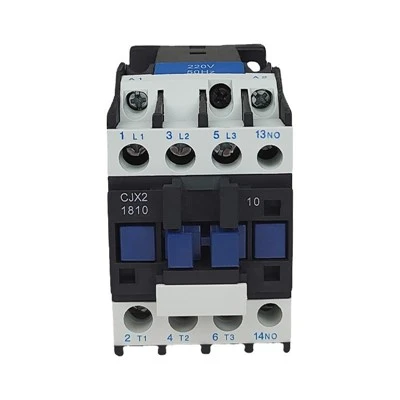
First, let’s define the arc most of us don’t see. When electrical current moves through a circuit, it creates a flow of charged particles (electrons and ions) that carry power. If that circuit is broken — when you flip a light switch or a breaker trips to stop an overload — the current doesn’t just vanish instantly. The gap between the breaker’s open contacts creates a path for the current to continue: this superheated, ionized gas is an arc, and it’s no small thing. A typical low-voltage arc can reach temperatures of 35,000°F — that’s four times hotter than the surface of the sun. A medium- or high-voltage arc? Even hotter. Left untamed, that arc doesn’t just damage the breaker’s internal parts; it can weld contacts shut, melt wiring, start fires in electrical enclosures, or cause explosive pressure buildups that damage entire panels. That’s why arc quenching is the core function of every circuit breaker, not a side feature.
A lot of people new to electrical work ask me why we can’t just pull apart two metal contacts hard enough to separate them and stop the arc. The answer is right there in the arc’s physics: as the contacts start to part, the electric field between them is strong enough to rip electrons off the air molecules in the gap, creating that conductive plasma that sustains the arc. The hotter the arc gets, the more gas molecules ionize, and the easier it is for current to keep flowing — it’s a cycle that feeds on itself, not something a simple air gap can kill. That’s why every breaker design relies on four core mechanisms to break that cycle, and they work in sequence the moment the breaker trips.
The first, and most common for low-voltage breakers, is magnetic blowout. I’ve worked on hundreds of low-voltage units, and this is the trick that feels like magic when you first see it in action. When current flows through the breaker’s contacts, it also passes through a pair of curved copper wires positioned right next to the contact gap. Per the right-hand rule of electromagnetism, current flowing through these wires creates a strong magnetic field that pulls on the ionized plasma of the arc. Instead of staying in the small gap between contacts, the magnetic field flings the arc upward into a long, narrow metal chute called an arc runner. By stretching the arc out over a much longer distance, we reduce its energy density — the same way a small campfire spreads out into a big pile of embers loses intensity. As the arc stretches, its temperature drops, and fewer air molecules stay ionized, breaking the conductive path. But we don’t stop there.
Once the arc is stretched into the arc runner, we use a second mechanism: arc splitting. Many breakers in industrial settings use a set of thin, parallel metal plates stacked along the arc runner. As the stretched arc hits these plates, it gets forced into separate, smaller arcs across each gap between plates. Each of these tiny arcs has a fraction of the energy of the original single arc, so they cool much faster. More importantly, air molecules can recombine in the gaps between the plates, turning the plasma back into neutral gas that doesn’t conduct electricity. I’ve tested this myself in our lab: an arc that would take milliseconds to die in a single gap takes microseconds with splitting plates — critical for stopping high-current overloads before they can cause damage.
For medium-voltage breakers, used in factories, commercial buildings, and utility substations, magnetic blowout and splitting aren’t enough. The arcs here are far larger and more energy-dense, so we use another set of mechanisms centered on insulating gas. The most common in use today is sulfur hexafluoride, or SF6, a gas that’s non-toxic, non-flammable, and an extremely effective insulator. Here’s how it works: when the breaker trips, two contacts separate inside a sealed chamber filled with SF6. As the arc forms, a small blast of compressed SF6 is released into the contact gap, blowing the arc away from the hot, ionized plasma zone and into a cooler area where the gas can absorb the arc’s heat and neutralize the charged particles. Unlike air, which takes time to recombine ions, SF6 molecules bind with free electrons almost instantly, turning the plasma back into a non-conductive gas. I remember a conversation with a plant manager at a food processing plant who had a previous breaker that failed during a motor startup, causing a 20-minute downtime that cost them $15,000. When we upgraded them to an SF6 medium-voltage breaker, they noted that the startup arc was gone entirely — that’s how effective gas quenching is. That said, I should note that newer, more sustainable alternatives to SF6 are gaining traction, and we’ve invested heavily in breakers that use dry air or other eco-friendly insulating gases without sacrificing arc quenching performance, a key priority for our industrial clients focused on sustainability.
High-voltage breakers, used in transmission lines and power grids, take this even further with oil quenching. For decades, oil was the go-to for these large breakers, and it’s still used in some older systems today. When the arc forms, it vaporizes a small amount of the insulating oil, creating a pressurized gas bubble that forces more oil into the contact gap. The oil does two jobs: it absorbs the arc’s heat, and it’s an excellent insulator that prevents the arc from re-striking once the current drops to zero. The downside is that old oil-filled breakers require regular oil testing and disposal, which is why we’re shifting most of our high-voltage clients to vacuum breakers now. Vacuum arc quenching is one of the most innovative technologies we’ve worked with in the last 10 years. Inside a vacuum chamber, there’s almost no air at all — only a tiny amount of metal vapor from the breaker’s contacts. When an arc forms, it’s made of that metal vapor, not air or gas. The moment the current reaches its natural zero point (AC current crosses zero 120 times per second in North America), the metal vapor condenses back onto the contact surfaces, turning the conductive plasma into solid metal. That’s why vacuum breakers are so reliable for grid applications — they don’t need external gas or oil, they require almost no maintenance, and their arc quenching is faster than any other method. I’ve installed vacuum breakers at a municipal power substation last year, and the lead engineer there told me that in three months of use, they’ve had zero arcing-related issues, even during peak summer demand when power loads are highest.
One thing I want to clarify for anyone who’s ever been confused about arc length: arc quenching isn’t just about making the arc shorter. It’s about eliminating the conductive path before the current can reignite. That’s why current zero is such a critical point in AC circuits. Unlike DC, where current flows in a single direction, AC current drops to zero every half-cycle, and the arc has a much harder time surviving when current is at its lowest. All the mechanisms I mentioned work to take advantage of that current zero point: stretching the arc to reduce its energy, cooling the plasma to make it less conductive, or neutralizing charged particles, so that when current hits zero, there’s not enough ionized gas left to allow it to restart. For DC circuits, which don’t have natural current zero, we have to add extra steps — things like forcing the current into an artificial zero point with a resonant circuit, or using much stronger magnetic fields to stretch the arc very quickly. That’s why DC breakers for electric vehicle charging stations or large battery storage systems are more complex, and it’s a space we’ve been investing heavily in as renewable energy adoption grows.
As a circuit breaker supplier, I’ve seen first-hand what happens when arc quenching is overlooked. Early in my career, I worked with a small commercial building that installed cheap, untested breakers for their new HVAC system. When the compressor overloaded, the arc from the tripping breaker welded the contacts shut, leading to a small fire in the electrical closet that damaged $20,000 worth of equipment and forced the building to close for a week. That experience taught me that arc quenching isn’t a technical detail — it’s the core of a breaker’s reliability, and it’s not a place to cut corners. All the breakers we supply, from residential models to grid-scale units, are tested to exceed industry standards for arc quenching performance, because we’ve seen the cost of a breaker that fails to kill the arc.
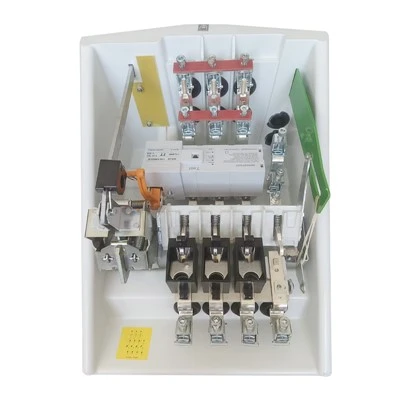
If you’re a facility manager, electrician, or system designer working on a new build, upgrading an old electrical system, or troubleshooting frequent tripping issues, you know how critical reliable circuit protection is. The right breaker doesn’t just stop power when there’s a fault — it protects people, equipment, and property from the invisible, deadly arc that tries to survive every interruption. To learn more about our line of arc-quenching circuit breakers, tailored to your application and budget, and to discuss how we can help you choose the right solution for your needs, feel free to reach out and arrange a conversation with our team of electrical experts. We’re here to answer questions, walk through specs, and make sure you have the protection you need, no matter the size of your project.
LV Pole Mounted Circuit Breakers REFERENCES
Miller, H. C. (2015). Arc Phenomena in Electrical Apparatus. IEEE Press.
El-Hag, A. H. (2020). Modern Circuit Breaker Technologies for Power Systems. CRC Press.
Busch, F. (2018). Principles of Arc Quenching in Low-Voltage Switchgear. John Wiley & Sons.
Wenzhou Lanen Electrical Co., Ltd.
Wenzhou Lanen Electrical Co., Ltd. is one of the most professional circuit breakers manufacturers and suppliers in China, also supports customized service with low price. Please feel free to buy CE approved circuit breakers made in China here from our factory. Contact us for more discount information.
Address: Zhiguang Liushi Town Yueqing City Wenzhou City Zhejiang Province
E-mail: lanen@luyele.cn
WebSite: https://www.lanenelectrical.com/
