If you’ve ever stepped into a bustling warehouse, retail back room, or small manufacturing shop, you know that cardboard waste isn’t just a pile of broken boxes and packing material—it’s a constant, often frustrating, operational headache. For years, I’ve worked as a cardboard baler supplier, talking to business owners every single day who are either drowning in uncompacted cardboard, overpaying for waste disposal, or wasting staff hours hauling and breaking down boxes manually. The question I hear most often? “How do I choose the right cardboard baler for my business?” Cardboard Balers

It’s no wonder this question lands at the top of so many to-do lists. A quick Google search brings up dozens of baler models, each advertising “maximum efficiency” or “lowest cost,” and it’s easy to get overwhelmed. Over the past decade, I’ve walked with café owners upgrading their small back rooms, mid-sized e-commerce brands expanding their warehouses, and even large distributors looking to cut monthly waste costs by six figures. I’ve seen businesses buy the biggest, most high-tech baler on the market only to find it’s too heavy to fit through their service door, or a tiny tabletop unit that can’t keep up with 100+ boxes a day. The key to making the right choice isn’t chasing the shiniest model—it’s matching the baler to your exact waste profile, space, and operational needs. That’s what I’m going to break down here, using real, on-the-ground experiences from businesses I’ve partnered with, not just generic specs.
First and foremost, you need to start with your actual cardboard waste volume—and I mean real, not estimated. I can’t tell you how many times a business will tell me, “We only go through a few boxes a week,” then laugh when they show me a 50-pound pile of flattened cardboard in their loading dock. The mistake here is simple: most people underestimate how much cardboard they generate. E-commerce businesses, for example, don’t just have order boxes—they have shipping pallets wrapped in cardboard, void fill, leftover packaging from inventory shipments, and even cardboard from customer returns. A small boutique e-commerce brand with a 1,000-square-foot fulfillment space might generate 50 to 100 pounds of cardboard a day, while a medium-sized grocery chain with 10 locations might generate 500 to 1,000 pounds daily. Large distribution centers? They can easily hit 5,000 pounds or more a day.
To get an accurate number, I always advise clients to track their cardboard waste for two full weeks. Set aside a bin specifically for cardboard, collect every piece, weigh it at the end of each day, and calculate an average. If you generate less than 50 pounds a day, a small, vertical baler is almost always your best bet. If you’re between 50 and 500 pounds daily, a mid-sized horizontal baler will keep up. And if you’re over 500 pounds, a large, high-output horizontal baler or even a full-size auto-tie model will save you countless hours of manual labor. I learned this lesson the hard way early in my career: I sold a small café a horizontal baler meant for mid-sized retail, and they couldn’t even lift the compressed bales, which ended up blocking their back door for three days. Tracking actual waste volume prevents that kind of misstep.
Next up: space. This is another make-or-break factor that no one talks about enough. You don’t have to clear out your entire back office to fit a baler, but you do need a designated area that’s accessible, well-ventilated, and has enough room for both the baler itself and the final compressed bales. Let’s talk about vertical vs. horizontal balers, because their space needs are very different. Vertical balers are compact—most models I sell are 4 to 6 feet tall, 3 to 4 feet wide, and 3 to 5 feet deep. That’s smaller than a standard refrigerator, which makes them perfect for tight spaces like small retail back rooms, café storage closets, or office mail rooms. The tradeoff? Vertical balers produce smaller bales, usually 30 to 50 pounds, and they require you to tie the bale manually when it’s full. For a small business generating under 50 pounds a day, that’s a non-issue. But if you’re producing 200 pounds a day, you’d be tying two or three bales a day, which adds up to extra time spent on waste management.
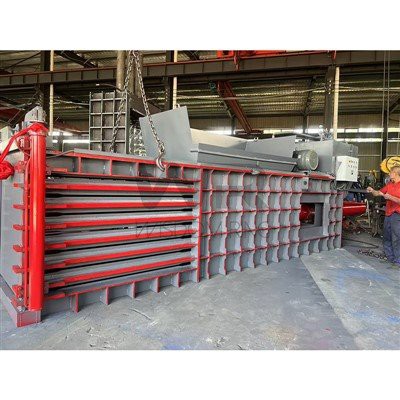
Horizontal balers, on the other hand, are larger, more powerful, and designed for higher volume. They range from 8 to 12 feet long, 4 to 6 feet wide, and 5 to 7 feet tall—so they need dedicated, open space, usually near a loading dock or area where bales can be picked up by a waste hauler. A mid-sized horizontal baler I recently installed for a home goods e-commerce brand fit in their 10×15 foot loading dock extension, but we had to plan for the bale area, too—each bale from that unit is 500 to 1,000 pounds, so we needed space to stack three or four full bales before pickup. If you don’t have that space, you might be stuck making multiple trips to a waste drop-off center, which cancels out any labor savings from the baler. I always tell clients to measure their available space first, then compare that to the footprint of the baler (plus a 2-foot buffer around all sides for safety and maintenance) before even looking at specs.
Another critical factor: labor and operational workflow. Let’s be real—no business wants to spend more time on waste management than necessary. So think about who will be using the baler, how much time they can dedicate to it, and what their existing routine looks like. For example, if you’re a small office with one part-time admin who handles mail and waste, a vertical baler that requires manual tying is perfect. It’s easy to operate, doesn’t need any special training, and the admin can run it while sorting mail. But if you’re a mid-sized warehouse with a team of staff who process 1,000 orders a day, manual tying becomes a bottleneck. Auto-tie horizontal balers are designed to solve that problem—they automatically wrap wire or twine around the bale when it’s full, so a single operator can start a bale and walk away to do other tasks. That cuts waste management time by 70% or more, according to the data I’ve collected from clients over the years.
Don’t forget about safety, either. A lot of business owners overlook this until it’s too late. All balers come with safety features, but some are better suited for low-skill environments than others. Vertical balers have fewer moving parts, so they’re safer for small teams with limited training, while large horizontal balers have more complex hydraulic systems, so they require more rigorous safety protocols. I once had a client who worked with a big-box retailer that had a horizontal baler with basic safety guards—they didn’t have lockout/tagout procedures, and a staff member got a minor injury when a bale shifted. Since then, we’ve partnered with that client to install auto-tie models with enhanced safety interlocks that stop the machine if any part of the operator is inside the chamber, and we provide on-site safety training every quarter. Safety isn’t an afterthought—it’s a non-negotiable for any business.
Cost is almost always top of mind, but here’s the thing: it’s not just the upfront cost of the baler. You have to calculate the total cost of ownership, which includes monthly waste hauling fees, labor costs for waste management, maintenance, and even electricity use. Let’s do a quick example: a small café generating 50 pounds of cardboard a week might pay $30 a month for waste hauling if they don’t have a baler. A vertical baler costs around $2,500 upfront, and it cuts their hauling fees in half because they can turn loose cardboard into dense bales that take up less space in the truck. They also save 2 hours a week of staff time that was previously spent breaking down boxes. That’s a return on investment (ROI) in less than a year.
On the flip side, a mid-sized e-commerce brand that spends $500 a month on waste hauling might be tempted to buy a cheap vertical baler for $1,500. But that vertical baler would require 5 hours a week of manual tying and bale handling, so their labor cost goes up by $150 a month, and their hauling fees only drop by $100. The ROI would be over three years, and they’re wasting more time than they’re saving. In that case, a mid-sized horizontal baler that costs $8,000 upfront would cut hauling fees by 70%, cut labor time by 80%, and have an ROI in 18 months. That’s the kind of math I walk through with every client. I also always emphasize not skimping on maintenance—cheap baler parts lead to breakdowns that cost more in downtime than saving a few dollars on a lower-quality unit.
One final consideration that I’ve seen make a huge difference for businesses: future growth. If you’re a startup with 10 employees, that’s one thing, but if you’re planning to expand your operations in the next 2 to 3 years, you need to buy a baler that can grow with you. I had a client a few years back who owned a small gift shop, bought a vertical baler when they had 200 pounds of cardboard a week, then expanded to three locations a year later, generating 800 pounds a week. They were stuck with a baler that couldn’t keep up, and they had to pay to have it hauled away and buy a new one—costing them $4,000 in unnecessary expenses. If they’d bought a mid-sized horizontal baler upfront, they could have easily handled the 800 pounds a week, and it would have fit their needs as they grew. It’s better to plan for what’s next, even if your current volume is small.
At the end of the day, choosing the right cardboard baler isn’t about picking the most expensive or the fanciest model on the market. It’s about sitting down with your team, tracking your waste for two weeks, measuring your space, and being honest about how much time and labor you can dedicate to waste management. If you’re still not sure where to start, that’s what I’m here for. I’ve worked with hundreds of businesses across all industries, from small retail shops to large distribution centers, and I can help you assess your exact needs, walk through your space and waste volume, and find a baler that saves you time, money, and stress.
If you’re ready to stop drowning in cardboard waste and start making that pile work for your business (compact cardboard bales can be sold for recycling, by the way—another added revenue stream!), reach out to connect about your requirements. No sales pitch, no pressure, just straight talk about what will actually work for your space and your team.
Grantry Shears References
- Institute of Scrap Recycling Industries, Inc. (ISRI) 2023 Global Waste Management Trends Report
- American National Standards Institute (ANSI) Standard B11.1-2022, Safety Requirements for Construction, Care, and Use of Balers and Compactors
- Waste360 2024 Small Business Waste Management Survey
Xi’an Wisdom Ring Machinery Co., Ltd.
As one of the leading cardboard balers manufacturers and suppliers in China, we warmly welcome you to buy advanced cardboard balers for sale here from our factory. All customized machines are with high quality and competitive price. Contact us for quotation.
Address:
E-mail: copperrecycling@wisdomringmachinery.com
WebSite: https://www.wisdomringmachinery.com/
