Hey there, let’s cut to the chase – if you’re running a roll forming operation, you know how game-changing cold roll formers can be. But here’s the hard truth: even a top-tier cold roll forming machine (that’s the one we supply, by the way) will lose its precision faster than your morning coffee cools if you don’t keep up with maintenance. I’ve worked with hundreds of fab shops over the years, and most precision drops aren’t from flimsy machines – they’re from cutting corners on upkeep. Today, I’m breaking down exactly how to keep your machine hitting tight tolerances every single run, no guesswork needed. Cold Roll Forming Machine
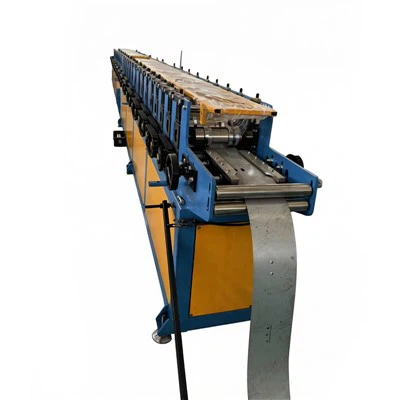
First off, let’s define “precision” here because it means different things to different folks. For our customers, that’s +/-.005 inch on profile dimensions, consistent hole alignment, no weird bowing or twisting in finished parts, and zero scrap from misaligned rolls. If your machine’s slipping on that, it’s not just lost material – it’s lost time, which is lost money. I’ve seen a shop that ran a 10-station machine for 18 months without a tune-up, and by the end, they were scrapping 12% of every batch. That’s not a “machine wear” issue – that’s a “no maintenance” issue.
Let’s start with the basics that most people skip: daily checks that take 10 minutes tops. I tell every new customer the same thing: if you don’t do these, nothing else matters. First, visually inspect the roll stands. Look for any chipped edges on the roll surfaces – those tiny nicks might seem harmless, but they’ll transfer to your profile faster than you think. We once sent a machine to a shop that forgot to wipe a metal shaving off a roll before first run, and they were chipping every part for 3 weeks until they figured it out. Next, check the feed plate alignment. The metal strip has to sit perfectly flat before it hits the first set of rolls – if it’s tilted even a degree, that throw’s off the entire profile. I keep a little 6-inch precision square in my toolbox for on-site checks; it takes 2 seconds to hold it against the feed plate to make sure it’s parallel to the roll axis. Oh, and don’t sleep on the lube – not just any lube, but the right one. A lot of guys use generic grease, but cold roll formers need anti-wear (AW) grease for the bearings. Wipe down the roll surfaces and lube the guide rolls every shift if you’re running high-volume. Skip this, and your rolls will start “galling” – that’s when metal transfers from the strip to the roll, creating rough surfaces and inconsistent profiles.
Next, the weekly deep dive. This is where you dig a little more, not just surface checks. First, clean the gearboxes. Roll formers use a ton of gear oil, and dust, metal shavings, and debris will mix in over time, turning that lube into a grit paste. I teach our customers to drain the gearbox every 500 hours (not 1000, like some old manuals say – modern machines run tighter, so they get dirty faster) and flush it with a light solvent before refilling with the manufacturer-recommended oil. If you’re using our machines, that’s ISO 220 for most standard runs, but tell our techs if you’re forming high-tensile steel, and we’ll hook you up. Then, check the roll gap alignment. This is trickier than it sounds – each pair of rolls has to be perfectly centered, not too tight, not too loose. I use a feeler gauge set to check the gap between the top and bottom rolls at every station. If the gap is off by more than .002 inch, that’s a problem. A lot of shops skip this because they think the machine’s “factory calibrated,” but vibration from daily runs will throw that off after a few weeks. Also, inspect the entry and exit guides. Those are the metal arms that keep the strip straight through the rolls – if they’re bent or worn, they’ll push the strip off-center, and your profile will be all wonky. I once talked a guy out of replacing his entire $50k machine because his exit guide was just bent 1/8 inch – he fixed it with a hammer and a straight edge, no big deal.
Now, the monthly stuff, the kind that prevents major precision drift. This is where we get into the stuff that’s easy to put off, but makes all the difference. First, check the machine’s bed alignment. The entire frame has to be perfectly straight – even a tiny warp in the bed will make the rolls tilt, leading to inconsistent profiles. I use a dial indicator for this, mounted on a magnetic base. Run it along the length of the bed, and if there’s more than .01 inch of variation, you’ll need to adjust the leveling bolts. A lot of machines come with adjustable feet, so that’s a simple fix, but don’t ignore it. Next, inspect the bearings. Roll stands rely on precision bearings, and if they’re worn, the rolls will wobble. I spin each roll by hand – if there’s any grittiness or noise, it’s time to replace the bearings. Don’t wait for them to seize; I’ve seen a machine where a bad bearing chewed up a $2k roll set in a week, which is way more expensive than replacing the bearings proactively. Also, check the shear blade alignment if your machine has a cut-to-length function. A misaligned shear will cut parts that are slightly off-length, and that’s a precision killer for assembly. Run 3 test cuts every month, measure them, and adjust the blade gap to .001 to .003 inch – not tighter, that’ll cause burrs.
Wait, let’s talk about something specific to our machines: roll change protocols. A lot of guys think “as long as I put the rolls back where they were, it’s fine” – that’s a huge mistake. Every time you change rolls, you have to re-calibrate the alignment, even if it’s the same roll set. Vibration, heat from forming, even just removing and reinstalling the rolls can shift them. I walk every customer through our roll change checklist: clean the roll journals with a rag (no abrasive pads, scratch the metal!), use a taper gauge to set the roll gap, tighten the lock bolts in a crisscross pattern (never tighten one all the way first – that tilts the roll), and run a test profile before putting it into production. I had a customer last year who skipped that and ran a batch of 1000 parts that were ¼ inch off – they had to scrap all of them, because the cost of re-calibrating was way less than the scrap.
Then there’s the “big maintenance” – the semi-annual tune-up. This is for when your machine has been running 24/7, 3 shifts, no stops. We recommend this every 6 months for high-volume shops, once a year for lower-volume. For this, we send out a tech (or if you’re handy, we have a video walkthrough) to do a full disassembly inspection: check for wear on the roll shafts, test the gear backlash, tighten all frame bolts (vibration will loosen them over time, I’ve seen bolts vibrate all the way out from a machine running 12 hours a day), and re-calibrate the entire machine. Backlash is a big one – that’s the play in the gears. If backlash is more than .005 inch, it will cause inconsistent forming, especially with thin materials. We measure it with a dial indicator, and if it’s off, we adjust the gear spacing.
Now, let’s bust a few myths I hear all the time. First: “Cold roll formers are indestructible, I don’t need to maintain them.” No. I’ve repaired machines that were 15 years old because the owner skipped maintenance, and they were nowhere near as precise as a 5-year-old machine that was maintained. Second: “I can just adjust the rolls if precision is off.” That’s a band-aid, not a fix. If your rolls are misaligned because the bed is warped, adjusting the rolls will just make them wear faster. Third: “Generic lube works fine.” Nope. Using the wrong oil or grease can cause bearing wear, galling, and even gear failure. Stick to what we recommend, or if you’re using another brand, ask for a compatibility check – we help customers all the time with that.
Also, let’s talk about parts – if you need replacement rolls, bearings, or gears, don’t skimp on cheap off-brand parts. I get guys who say “why pay more for your rolls?” but cheap rolls are made with inferior steel, they wear out 3x faster, and they won’t hold their precision. Our rolls are made from tool steel, heat-treated to 58 HRC, which means they stay sharp for thousands of runs. I’ve seen a customer buy a set of $500 off-brand rolls that wore out in 3 months, vs. our $1200 rolls that lasted 2 years. That’s a no-brainer, right?
Wait, one more thing: environment. Where you set up your machine matters a lot. If it’s in a shop with huge temperature swings – like a garage that’s 30 degrees in winter and 90 in summer – the frame will expand and contract, throwing alignment off. We recommend keeping the shop temperature consistent, between 60 and 80 degrees, if you want maximum precision. Even a 10-degree swing can shift the bed by .002 inch, which might not sound like much, but on a 20-foot profile, that’s a 0.04 inch difference – enough to make the part unfit for many applications.
Let’s wrap this up with a quick actionable checklist you can print and tape to your machine: Daily (10 mins): Wipe rolls, check feed plate alignment, lube guide rolls. Weekly (30 mins): Drain/flush gearbox, check roll gap, inspect entry/exit guides. Monthly (1 hour): Check bed alignment, test bearings, calibrate shear. Semi-Annual (4 hours): Full tune-up, replace worn parts, re-calibrate entire machine. Sticking to this will keep your machine precise for years, cut scrap, and boost your productivity.

If you’re having trouble with your current machine’s precision, or you’re in the market for a new cold roll forming machine, our team is here to help. We don’t just sell equipment – we work with you to set up maintenance schedules, train your team, and troubleshoot any issues that come up. Don’t let poor maintenance kill your profits – reach out, and let’s get your operation running at peak precision.
Metal Sheet Roll Cold Rolling Forming Equipment References
- Modern Cold Roll Forming Technology: Maintenance and Precision Control, Society of Manufacturing Engineers, 2021
- Roll Forming Machine Upkeep Best Practices, American Metal Stamping Association, 2022
- Precision Alignment Standards for Roll Forming Lines, International Cold Forming Association, 2023
Wuxi Yuanding Machinery Manufacturing Co., Ltd.
Address: Yaguang Industrial Park, No. 88 Chaoyang South Road, Xishan District, Wuxi City, Jiangsu Province
E-mail: 13861798466@163.com
WebSite: https://www.wxyuanding.com/
