Hey everyone, Deionized Water System

If you’re reading this, chances are you’re dealing with that annoying, slow trickle coming out of your deionized (DI) water system. I’m gonna be real—low flow rate in DI systems is one of the most common headaches our team gets hit with, and it almost always creeps up when you least expect it, right? Like, you just swapped out the pre-filters a month ago, and now your rinsing tanks are taking twice as long to fill, or your lab testing equipment is throwing weird errors because the water isn’t moving fast enough. I’ve been in this game for years—we install, maintain, and troubleshoot DI systems every single week—and let me walk you through how we diagnose and fix this without pulling your hair out.
First, let’s get one thing straight: DI systems rely on a few key parts working in sync, so low flow rarely comes from just one random thing. It’s usually a chain of small issues that build up, but we start with the easiest, fastest checks first. No need to take apart the whole system on day one—let’s knock out the quick stuff first.
The first thing I always tell our customers to check is the inline pre-filters. Wait, I know—you probably changed them 3 months ago, but hear me out. Sediment pre-filters (usually 5-micron ones) catch all the gunk from your tap water: dirt, rust, pipe scale, even that weird brown sludge that sneaks in when the city flushes mains. If you’re running the system a lot—like 12+ hours a day for a manufacturing line or a busy lab—those filters can clog way faster than the 6-month timeline some suppliers throw out. How do you tell if it’s the pre-filters? Just hold a bucket under the system’s outlet and run it for a minute. If the flow is way lower than when you last changed filters, and the inlet pressure to the DI tank is way higher than normal (you can check that on the pressure gauge on your system—we install those on all our units now), that’s a dead giveaway. Last month we got a call from a biotech lab where the pre-filter had so much mold growing in it because they didn’t replace it when the quarterly reminder hit. Swapping that single filter brought their flow back up 40% instantly. Pro tip: mark your filter change dates on the gauge or a sticker on the system—we always recommend every 3 months for heavy use, 6 max for light use. No exceptions.
Next up, check the inlet water pressure. This is another super easy one that people sleep on. DI systems are built to work with a certain pressure range—usually 40-60 PSI, for anyone who doesn’t know their PSI (I still mix mine up sometimes, but it’s right there on the gauge). If your incoming tap pressure is below 35 PSI, that’s like trying to fill a pool with a garden hose that’s only half open. The system can’t push water through the resin beds fast enough, so you get that sluggish flow. How do you check tap pressure? You can pick up a cheap pressure gauge at any hardware store for $10, screw it onto your hose bib, and run the tap full. If it’s under 40 PSI, call your water utility—they might have a pressure regulator on your side of the meter that’s stuck closed, or there’s a leak somewhere in your building’s main line. We had a food and beverage client last year whose basement pressure had dropped to 28 PSI because a toilet was running non-stop upstairs. Fixed the toilet, pressure jumped to 52 PSI, and their DI flow was back to normal by lunch. Also, if you’ve added any new appliances to your space lately—like a new ice maker or a coffee bar—that can pull pressure away from your DI system. Just make sure all other water-using equipment is off when you test DI flow, and that’ll rule that out.
Okay, so if pre-filters and pressure are good, the next culprit is usually the DI resin itself. Resin is the stuff inside the tanks that strips the ions out of water to make it deionized, right? Over time, that resin gets “exhausted”—it can’t grab any more ions, so it’s not letting water pass through as easily, or worse, it’s clogging up with the crud it did catch. How do you know if resin is bad, not just the filters? Two quick tests: first, check the conductivity of the outlet water. Good DI water has conductivity under 1 microSiemens per cm (µS/cm), if it’s higher than that and your flow is low, that’s a sign exhausted resin is blocking flow. Second, if you can, take a quick look at the resin (don’t open the tank without shutting off the pressure first, safety first). If the resin looks gray, slimy, or has chunks of gunk in it instead of the clear or light brown beads it should be, that’s exhausted or contaminated resin. We see this all the time with clients who run high TDS (total dissolved solids) water through their systems—like if your tap has 200+ TDS, resin wears out way faster. A full resin bed swap usually brings flow back to 95% of its original rate, and it’s way cheaper than buying a whole new system. Pro tip: if you’re low on cash right now, most DI systems can be “regen-rated” temporarily (though regening too often shortens resin life)—just run the system in backwash mode for 10 minutes to loosen up the resin, that’ll give you a short-term flow boost while you save up for a full swap.
Wait, another thing a lot of people miss: the cartridge between the pre-filters and the DI resin, sometimes called a carbon block filter. That one’s for removing chlorine and volatile organic compounds (VOCs) that can damage the resin, so if that’s clogged, it’s restricting flow just like a pre-filter. I once had a semiconductor client who skipped carbon filter changes for 8 months because they thought it was just a “nice to have” add-on. Their flow was so low they had to pause production for a shift, and when we took the carbon filter out, it was solid black with gunk—literally impossible for water to get through. Swap that bad boy, and boom, flow is back. Don’t skip that carbon filter, guys. It’s not just for resin protection—it’s for flow too.
Now, if all that checks out—filters, pressure, resin, carbon filter—you gotta look further downstream. Maybe the outlet line is clogged? Sometimes sediment or even small pieces of broken pre-filter end up in the tubing, especially if you just changed filters and didn’t flush the line first. To check that, disconnect the outlet line from the DI system and run water directly from the system’s outlet into a bucket. If the flow is still low when you bypass the tubing, then the problem is upstream of the line. If it’s high when you bypass, then you need to take apart the outlet line and clean the gunk out—just run a brush through the tubing or replace a short section if it’s really crudded up. We also see this a lot with clients who have valves on their outlet lines—someone might have accidentally closed it half-way, or the valve got stuck from years of not being used. Turn all valves fully open and closed a few times to unstick them, that’s a super quick fix.
Another less common but still frustrating issue: air locks. If you did maintenance on the system, like changing filters or resin, and didn’t vent the tank properly, air gets trapped in the lines or resin bed, and it blocks water from flowing through. How to fix an air lock? Most systems have a vent valve on the top of the DI tank—just open it slowly when the system is running, and you’ll hear air hissing out. Once water starts dripping out, close the valve, and your flow should pick up within a minute. I once showed a new maintenance guy how to do this, and he over-tightened the valve, so we had to redo it the next day—easy mistake, just take it slow.
Wait, let’s talk about when it’s not a quick fix. If you’ve gone through all these steps and your flow is still low, it might be a bigger issue—like a faulty pump. The pump is what pushes water through the whole system, right? Over time, pump seals wear out, or the impeller gets clogged, so it can’t generate enough pressure. How do you test the pump? Disconnect the inlet line from the pump and put it in a bucket of water, run the pump, and see if it’s pushing strong. If it’s sputtering or not pushing much, the pump is bad. We usually offer pump replacements for most systems, and if you bought your DI system from us, we give a 2-year parts warranty on pumps, so that’s covered. Another big one is scale buildup in the resin tanks—if your water has super high hardness, calcium and magnesium can build up on the resin beads over time, making them stick together and block flow. To fix that, you can do a citric acid clean on the resin—mix 1 pound of citric acid per 5 gallons of water, run it through the system in a recirculate mode for 2 hours, then flush it out with clean water. That breaks down scale and can bring flow back up without replacing resin.
Let me wrap this up with some real talk from our team. We get so many calls from customers who overcomplicate this, or wait too long to do simple maintenance, which turns a $20 filter swap into a $500 pump or resin replacement. DI systems are pretty simple, really—they’re all about keeping water moving through clean filters and fresh resin. The number one rule we tell every client: track your flow rate and filter change dates. Even if you don’t check conductivity every week, just note how long it takes to fill a 5-gallon bucket. If it goes from 2 minutes to 4 minutes, that’s your early warning sign.
If you’ve tried all these steps and you’re still stuck, or you just don’t want to mess with taking apart your system, reach out to our team. We can walk you through troubleshooting over the phone, or send a technician out same-day for emergency calls—we know how important DI water is for your work, whether you’re making semiconductors, processing food, or running a busy hospital lab. No job is too small, no headache too annoying.
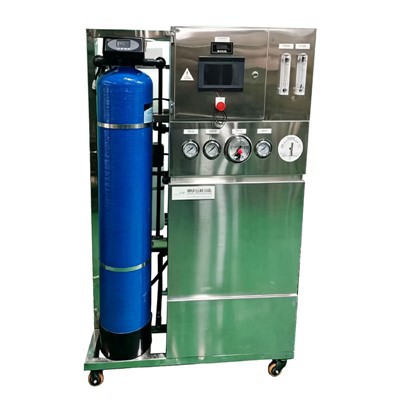
Before I sign off, quick recap of the main checks to save you time: 1) Test pre-filter flow, check pressure gauge. 2) Verify inlet water pressure is 40-60 PSI. 3) Check pre, carbon, and DI resin conditions. 4) Check outlet lines, valves, for clogs or air locks. 5) Test pump if all else fails. You got this. Don’t let slow flow ruin your day. If you need help with anything, from troubleshooting to replacing parts or even a full system upgrade, our team is here. Hit us up to chat about your needs, no pressure, just real advice from people who work with DI systems every single day.
Pretreatment & Filtration Equipment References:
- ASTM D4517-15, Standard Test Method for Low-Level Total Dissolved Solids in Water by Conductivity Measurement.
- Water Quality Association (WQA) Technical Bulletin: Maintenance of Deionization Systems.
- National Sanitation Foundation (NSF) Standard 58 for Reverse Osmosis and Deionization Systems.
- American Water Works Association (AWWA) M12 Manual: Water Treatment for Industrial and Other Special Uses.
Shandong Yanuo Environmental Protection Equipment Co., Ltd.
We’re well-known as one of the leading deionized water system manufacturers and suppliers in China, featured by quality products and good price. Please rest assured to buy bulk deionized water system made in China here from our factory. Customized orders are welcome.
Address: North Side of the Road, 1,000 Meters West of the Intersection of Fenghuangshan West Road and Provincial Highway S102, Wangfu Subdistrict, Qingzhou City, Weifang City, Shandong Province.
E-mail: ynhb.499973983@gmail.com
WebSite: https://www.zkyaruo.com/
