Hey there, if you’re here, you’re probably deep in the weeds with high-pressure breathing air compressors—whether you’re a dive shop owner prepping for a busy season, a hazmat team needing reliable breathing air for confined space entries, or a commercial diver gearing up for a long offshore job. One question I get asked every single day (seriously, at least 5 times a week) is: “What size tank do I need for my high-pressure breathing air compressor?” High Pressure Breathing Air Compressor

First off, let’s cut through the confusion here. A lot of folks mix up compressor specs with tank requirements, and that’s a mistake. The compressor’s job is to fill the tank, but the tank’s size depends entirely on how you’re gonna use that breathing air, right? I’m not here to throw a bunch of jargon at you—let’s break this down like we chat in the warehouse when you call in.
First, let’s nail down what we’re actually working with here. High-pressure breathing air for these applications is usually 3000 PSI (that’s standard for most scuba, industrial breathing) or 4500 PSI for technical diving or longer runs. The tank’s volume is measured in cubic feet of free air, meaning air at normal atmospheric pressure (14.7 PSI, what we breathe every day). That’s key—so a 10 cubic foot tank at 3000 PSI doesn’t hold 10 cubic feet, it holds way more, but we measure it as free air because that’s how breathing air consumption is calculated.
Now, the biggest variable here is your air demand rate. Let’s use real-world examples, not numbers out of a textbook. If you’re a recreational diver doing a shore dive, you’ll burn through air at about 0.8 to 1.2 cubic feet per minute (CFM) when you’re moving at a relaxed pace. But if you’re working a confined space entry, carrying heavy gear, stressing out a little? That jumps to 1.5 to 2 CFM easily. Commercial divers doing deep offshore work? We’re talking 2 to 4 CFM, no cap. Hazmat teams putting on heavy suits to handle chemical spills? Even higher—up to 5 CFM, because that work is way more physically intense.
So if your demand is, say, 2 CFM for a 15-minute confined space check? That’s 30 cubic feet of free air you need. If it’s a 1-hour job, that’s 120 cubic feet. Now, how does that translate to tank size, linked to your compressor? Wait, another thing: your compressor’s output is also in CFM, but that’s at high pressure, so we have to convert that too. A typical 3000 PSI breathing air compressor puts out about 3 to 5 CFM of free air equivalent. So if you need 120 cubic feet, a 71 cubic foot tank (that’s a common size, like a steel 3000 PSI tank) would fill in just under 25 minutes, which is enough for most 1-hour jobs with a little buffer.
Wait, but here’s the catch most new folks miss: you never want to run your tank completely empty. Breathing air systems require a minimum pressure for the regulator to work—usually around 500 PSI. So that means the usable air in the tank is not the full rated free air, it’s (rated pressure minus 500 PSI) divided by rated pressure times the tank’s free air volume. Let’s test that with a 71 cubic foot, 3000 PSI tank: usable free air is (3000 – 500)/3000 *71 = 59.17 cubic feet. So if your demand is 2 CFM, that’s about 29 minutes of run time, not counting any buffer for emergencies. That’s why you can’t just pick a tank size based on your total demand—you have to account for that reserve.
Another scenario: technical diving, where you might do a 2-hour deep dive, no surface support for a bit. Your demand could be 1.5 CFM, so 180 cubic feet needed, minus a 500 PSI reserve. A 100 cubic foot, 4500 PSI tank would give you (4500 -500)/4500 *100 = 88.89 cubic feet? Wait no, wait—wait 4500 PSI tank, 100 cubic foot free air: usable is (4500-500)/4500 *100 = 88.89, so you’d need two of those for 177.78, which is perfect for 2 hours. Or a bigger tank, like a 120 cubic foot 4500 PSI, which gives 106.67, so two would still work, but maybe one big tank is easier to haul.
Now, let’s talk about when people undersize or oversize tanks. Undersizing is the most common mistake, right? You get a smaller tank because it’s cheaper, but then you’re stopping to refill it every 20 minutes, which is a pain and a safety risk. I’ve had a dive shop owner call me last year who bought a tiny tank for their mobile compressor, and he was out at a lake all day refilling 10 times—wasting fuel on his generator, wasting his time. Oversizing is also a problem: a 200 cubic foot tank is heavy, hard to transport, way more expensive than you need if you only do 30-minute dives on weekends. Why pay extra for a tank you’re never gonna fill all the way?
Wait, also—your compressor’s type matters here. If you’re using a portable compressor for field work, it’s probably a smaller unit, like a 2 CFM compressor, so you need a tank that the compressor can fill in a reasonable amount of time. If you have a stationary compressor for a workshop, it might be 8 CFM, so you can use a smaller tank, because the compressor will fill it fast, and you won’t have to store a ton of air you might not need. Also, make sure your compressor is rated for breathing air, not just industrial air. A lot of regular air compressors have oil or moisture that’s bad to breathe—so that’s a whole other factor, but when you pair it with the right tank, that’s how you get safe, clean breathing air.
Let’s run through a quick checklist for you, so you don’t have to guess:
- Write down your average air demand: Time your last job, count how many CFM you used. If you don’t have old data, ask your team—they’ll know roughly how much they burn.
- Add a 20% buffer for emergencies. Yeah, stuff happens—someone’s gear gets stuck, they take a wrong turn, so extra air is non-negotiable.
- Calculate usable air: Subtract 500 PSI from your tank’s rated pressure, divide that by rated pressure, multiply by the tank’s free air volume. That’s the actual air you can breathe.
- Match to your compressor: Make sure your compressor can fill that tank in a time that works for you. If you refill every break, your compressor’s CFM needs to keep up.
Wait, what about common tank sizes we see most? For recreational divers and small industrial teams: 40 cubic foot (3000 PSI) is for short dives, 71 cubic foot is the sweet spot for most 1-hour jobs, 100 cubic foot for longer runs. For technical diving or commercial work: 120, 150, even 200 cubic foot tanks, usually 4500 PSI. And don’t forget—tanks have to be hydro-tested every 5 or 10 years, depending on where you are, so factor that into your setup too. A tank that’s out of test isn’t safe, no matter the size.
I get it, this stuff can feel overwhelming at first. When I first started in this business 12 years ago, I messed up a tank size for a fire department client—they needed 2-hour runs, I gave them a 50 cubic foot, and they had to cut their drill short. That was a wake-up call, and now I make sure to ask every client those same 4 questions I listed, no exceptions.
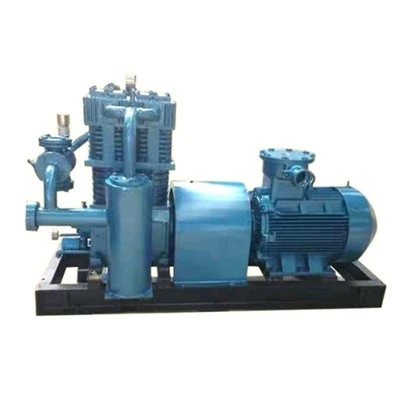
If you’re still not sure what size tank you need, or you’re looking for a compressor that pairs perfectly with the right tank for your work, don’t second-guess it. We’ve helped hundreds of dive teams, hazmat groups, commercial divers, and industrial facilities pick the right combo for their needs. Just reach out to us, tell us what kind of work you’re doing, how long your typical runs are, and we’ll hook you up with the right tank and compressor setup that’s safe, efficient, and won’t make you refill every 20 minutes.
Screw Gas Compressor References:
- Compressed Gas Association. (2020). Safe Practice for Breathing Air Systems. CGA G-7.1.
- National Fire Protection Association. (2021). Standard for Breathing Air Systems for Fire and Emergency Services. NFPA 1989.
- U.S. Department of the Interior, Bureau of Safety and Environmental Enforcement. (2019). Commercial Diving Operations: Air Supply and Compressor Standards. BSEE 2019-0001.
- American Society of Mechanical Engineers. (2022). Pressure Vessels for Breathing Air Service. ASME Boiler and Pressure Vessel Code, Section VIII.
Shanghai Sollant Energy Saving Technology Co., Ltd.
As one of the most professional high pressure breathing air compressor manufacturers and suppliers in China, we’re featured by quality products and good service. Please rest assured to buy bulk durable high pressure breathing air compressor from our factory. Welcome to view our website for more information.
Address: No.215, Songri Center, Beihongqiao, Jiading District, Shanghai, China.
E-mail: info3@sollant.com
WebSite: https://www.sollant-gas.com/
