If you’ve ever stood in a machine shop and watched a single operator juggle a lathe, mill, drill, and grinder all just to get one complex part done, you know how much time, space, and money that wastes. That’s exactly why multi-tasking turning centers exist—they’re the workhorses that’ve changed how we approach part manufacturing, and I’m stoked to break down what they actually are, why they matter, and how they can level up your shop. Let’s cut the jargon, no stuffy industry textbooks here. Multi-Tasking Machines

First, let’s get the basics straight: a multi-tasking turning center (sometimes people shorthand it to MTM, which is way easier than spelling out the whole thing) isn’t just a lathe with a fancy add-on. Traditional lathes spin a part to cut, while mills move the tool around to shape it, but they’re totally separate machines. With a multi-tasking turning center, you’re merging both operations into one setup—no more moving parts between machines, no more waiting for that drill press to open up, no more slight misalignments that mess up a tight tolerance.
Wait, let’s make that concrete. Say you’re making a hydraulic fitting for construction equipment. Traditional, you’d start on a lathe to turn the outside diameter smooth, then yank the part out, clamp it in a mill, drill a cross-hole, maybe grind the edge to deburr. Each time you clamp it, there’s a tiny chance of human error—like a 0.001-inch shift that makes the fitting leak. On an MTM, you load the part once, hit go, and it does all the turning, milling, drilling, even sometimes threading or laser marking right there. That’s the multi-tasking magic: it’s not just two functions, it’s combining all the secondary machining steps into one, all while the part stays secure in the same fixture.
Now, what makes an MTM different from, say, a mill-turn machine? Yeah, the terms get tossed around a lot, so let’s clear that up. A mill-turn is a machine that’s heavy on milling capabilities but can do basic turning. A multi-tasking turning center is centered around turning—so it has a main spindle that spins the part, a sub-spindle to hold the part if you need to machine both ends, and a turret (or two) packed with tools for all that secondary work: end mills, drills, taps, even live tools that spin while moving to cut. It’s built for turning first, extra tasks second, not the other way around. That’s a key point a lot of salespeople gloss over.
Let me also call out the unsung benefits that don’t get talked about enough, because when you’re running a shop, those add up fast. First, throughput: if a single part takes 30 minutes across three machines, it’ll take 15 on an MTM, easy. We’ve had customers go from 50 parts a day on a traditional setup to 120 on an MTM—same number of operators, same floor space, just a smarter machine. Then there’s quality: less clamping means less alignment error. One of our customers makes medical implant parts that need tolerances of 0.0005 inches, and they said they cut their part rejection rate in half when they switched to MTMs because they eliminated the human error from re-clamping. Oh, and floor space? Forget three machines taking up 200 square feet; an MTM takes 100, so you can either expand your production without moving or downsize and save on rent.
But wait, it’s not all perfect—no machine is. A lot of newer machinists, especially those trained on traditional lathes, get intimidated by MTMs because they blend two CNC disciplines. You’re not just writing G-code for turning; you’re writing it for milling too, so you need to be comfortable with both. Some shops also get sticker shock at the upfront cost, and I won’t lie: an MTM is more expensive than a basic lathe. But when you run the numbers, the savings from less labor, less scrap, less floor space make it pay for itself in 18 to 24 months on average. We’ve had customers who thought they couldn’t afford one come back a year later and buy a second, because the payback was way faster than they expected.
Now, let’s talk about what these machines do in the real world, because theory’s great, but seeing it in action is where it clicks. Automotive parts: think engine valves, axle shafts, transmission gears. All of those need turning for the main shape, then milling for keyways or drilling for oil holes. Aerospace fasteners: they’re tiny, have threads, cross holes, and sometimes small notches—perfect for MTMs to do all in one setup. Even everyday stuff: bicycle parts, like a crankset; you turn the main shape, mill the splines that attach to the pedals, drill holes for bolts—all on one machine. It’s not just for big manufacturers either; small job shops with 5 employees can use an MTM to take on jobs they couldn’t before, because they don’t have to outsource the milling or drilling to a third shop, which saves time and markup.
Let me throw in a quick example from a customer of mine last year. They were a small job shop that did mostly custom metal parts for local farms. Before MTM, they’d get a job for a 12-inch farm implement shaft that needed a flat spot milled on one end and a hole drilled through. They’d run the lathe, then the mill, and it would take 2 hours per part, plus they had to wait for the mill to be free. They got one of our 8-inch multi-tasking turning centers, and now they do the same part in 45 minutes—same operator, same space, and they can bid on jobs that require 5 or 6 operations because they can do them all in-house. They told me last month they turned down a big order because they didn’t have enough machine capacity, and now they can take that on with the new MTM. That’s the kind of win that makes this job worth it.
I also want to address a common misconception: some people think MTMs are only for high-volume production. No, that’s not true. A lot of our customers do small-batch or even one-off jobs, and they love MTMs because they reduce setup time. Setting up a traditional lathe and mill for a one-off part can take 2 hours total, but on an MTM, you set up the fixture once, load the tools you need, and you’re good to go. So even if you only make 10 parts a month, you’re still saving time and money. It’s a flexible machine, not just a mass-production workhorse.
Now, let’s talk about what to look for if you’re thinking about buying one, because not all multi-tasking turning centers are created equal. First, check the spindle size: if you’re turning big parts, you need a big main spindle. For smaller parts, a smaller spindle is cheaper and fast enough. Then, the number of tools and turrets: some have 12 tools, some have 24, some have two turrets that can work at the same time—parallel operations, that’s a huge upgrade. A sub-spindle is another big one; being able to hold the other end of the part means you don’t have to re-clamp it, which saves time and improves quality. Also, look at the CNC system: it should be easy to program both turning and milling, not just a clunky interface. A lot of budget machines have basic CNCs that make programming a headache, so skip those if you can.
I should also mention that while MTMs are powerful, they work best when you have skilled operators who know how to use them. You can’t just buy an MTM and leave it running; you need someone who can write the code, troubleshoot if a tool breaks, and adjust the setup if a part is off. That said, most modern machines come with training, and there are a lot of resources for machinists to learn multi-tasking operations now—so it’s not like you need a 20-year veteran just to run it.
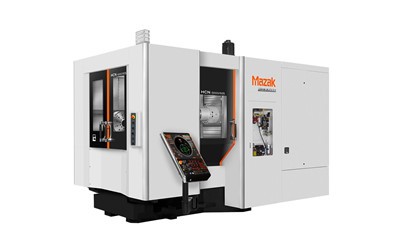
At the end of the day, a multi-tasking turning center isn’t just a machine. It’s a way to streamline your shop, reduce waste, take on more jobs, and make better parts faster. Whether you’re a small job shop or a big manufacturing plant, there’s an MTM that fits your needs. If you’re tired of wasting time moving parts between machines, dealing with misaligned parts, or outsourcing work you should do in-house, let’s talk. I’ve spent years working with shops to figure out what works for them, and I can help you find the right multi-tasking turning center that’ll fit your budget and your production goals. Don’t let outdated processes hold you back—let’s make your shop more efficient, together.
Machining Centers References
- Smith, J. (2022). Modern CNC Machining: Multi-Tasking Turning Centers for Job Shops. Industrial Press.
- Davis, R. (2021). Mill-Turn and Multi-Tasking Machine Tools: A Practical Guide. Manufacturing Engineering Magazine.
- National Institute of Metalworking Skills (NIMS). (2023). Operator Certification Curriculum for Multi-Tasking Machines. NIMS Publications.
- Haas, E. (2020). The ROI of Integrated Machining: Why Multi-Tasking Machines Deliver Long-Term Value. Cutting Tool Engineering.
- American Machinist Association. (2022). Shop Floor Efficiency: Reducing Setup Time with Multi-Tasking Turning Centers. AMA Industry Report.
Hermens Industrial Co., Ltd.
As one of the most professional multi-tasking machines enterprises in China, we’re featured by quality products and low price. Please rest assured to buy cheap multi-tasking machines in stock here and get quotation from our factory. We also accept customized orders.
Address: 9/59 Moo 14, Rachathewa , Bang Phli , Samut Prakan Province 10540
E-mail: liu_jincheng@hzhemen.com
WebSite: https://www.hermensindustrial.com/
