In the realm of modern manufacturing, CNC robots have emerged as indispensable tools, revolutionizing production processes across various industries. As a leading provider of CNC robots, I’ve witnessed firsthand the profound impact these machines have on enhancing efficiency, precision, and productivity. One critical factor that significantly influences the functionality and viability of CNC robots in different applications is the working envelope—a concept that encompasses the physical space within which a robot can operate effectively. Understanding the nuances of the working envelope is essential for businesses looking to optimize their manufacturing processes and achieve the best possible results with CNC robots. CNC Robot
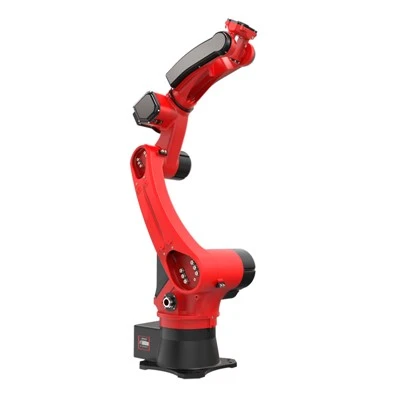
Defining the Working Envelope
The working envelope of a CNC robot refers to the three-dimensional space that the robot’s end – effector can reach. It is determined by several factors, including the robot’s mechanical design, the length of its arms, the range of motion of its joints, and the type of movement it is capable of performing. Think of it as the "playground" where the robot can perform its tasks. A larger working envelope means that the robot can access a greater volume of space, allowing it to handle larger workpieces or perform more complex tasks.
Impact on Application Scope
Size of Workpieces
One of the most obvious ways the working envelope affects the application of CNC robots is in terms of the size of the workpieces they can handle. For instance, in industries such as automotive manufacturing, large – scale components like car doors, engine blocks, and body frames need to be machined. A CNC robot with a limited working envelope will struggle to work on such large parts. In contrast, a robot with a generous working envelope can easily reach all the necessary points on the workpiece, enabling comprehensive machining operations. This is crucial for ensuring that the final product meets the required specifications and quality standards.
Complexity of Tasks
The complexity of manufacturing tasks also depends on the working envelope. In aerospace manufacturing, where components often have intricate geometries and require multi – axis machining, a CNC robot with a large working envelope and a high degree of freedom is essential. These robots can move in multiple directions and around different axes, allowing them to access hard – to – reach areas and perform operations such as drilling, milling, and grinding with extreme precision. Without an adequate working envelope, it would be impossible to complete these complex tasks efficiently and accurately.
Productivity and Efficiency
Reduced Setup Time
A well – designed working envelope can significantly reduce setup time. When a CNC robot has a large enough working envelope to access all the necessary machining areas of a workpiece without repositioning, there is no need for multiple setups. This not only saves time but also reduces the potential for errors that can occur during the setup process. For example, in a furniture manufacturing plant, a robot with a sufficient working envelope can machine an entire piece of furniture in one go, eliminating the need to move the workpiece multiple times and re – align it for different operations.
Increased Throughput
The ability to handle larger workpieces and perform complex tasks within a single working envelope directly translates into increased throughput. A CNC robot can complete more jobs in less time, leading to higher production volumes. In a mass – production environment, such as electronics manufacturing, where thousands of components need to be processed daily, the increased throughput provided by a robot with an appropriate working envelope can have a significant impact on the bottom line.
Flexibility and Adaptability
Multiple Workpiece Types
In today’s dynamic manufacturing landscape, businesses often need to produce a variety of workpiece types. A CNC robot with a large working envelope offers greater flexibility in this regard. It can be easily adapted to work on different sized and shaped workpieces without the need for extensive reconfigurations. For example, in a custom metal fabrication shop, the same robot can be used to process small, delicate parts one day and large, heavy – duty components the next, simply by adjusting the programming.
Changing Production Requirements
As market demands change, production requirements also evolve. A CNC robot with a suitable working envelope can adapt to these changes more easily. If a company decides to introduce a new product line with larger workpieces, a robot with a large working envelope can accommodate these new requirements without the need for a complete overhaul of the manufacturing setup.
Considerations for Selecting a CNC Robot Based on Working Envelope
When choosing a CNC robot for a specific application, several factors related to the working envelope need to be considered. First, it is essential to accurately assess the size and shape of the workpieces that will be processed. This includes not only the current workpieces but also any potential future workpieces. Second, the type of operations to be performed, such as cutting, welding, or assembly, should be taken into account. Some operations may require a larger working envelope or a specific range of motion.
Another important consideration is the layout of the manufacturing facility. The working envelope of the robot must fit within the available space in the factory. This includes not only the physical space for the robot itself but also the space required for loading and unloading workpieces, as well as any safety clearances.
Conclusion
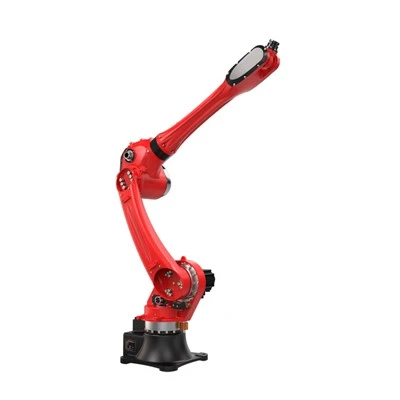
The working envelope of a CNC robot is a crucial factor that has far – reaching implications for its application in manufacturing. It determines the size and complexity of workpieces the robot can handle, affects productivity and efficiency, and provides flexibility and adaptability to changing production requirements. As a supplier of CNC robots, I understand the importance of carefully considering the working envelope when selecting the right robot for a particular application.
Pick and Place Robot If you are in the market for a CNC robot and need to optimize your manufacturing processes, I invite you to reach out to us. Our team of experts can help you assess your specific requirements and select the CNC robot with the ideal working envelope for your needs. By choosing the right robot, you can enhance your production capabilities, improve product quality, and gain a competitive edge in the industry.
References
- Groover, M. P. (2013). Automation, Production Systems, and Computer – Integrated Manufacturing. Pearson.
- Schaeffer, S. V. (2018). Industrial Robotics: Technology, Programming, and Applications. CRC Press.
- Spurgeon, S. K., & Chan, C. H. (Eds.). (2006). Advances in Robot Control. Springer.
Robotic Technology (GD) Co., Ltd.
Robotic Technology (GD) Co., Ltd. is one of the most experienced cnc robot manufacturers and suppliers in China, also supports custom service and one year warranty. Please feel free to wholesale CE approved cnc robot for sale here from our factory. Contact us for quotation.
Address: Room 102, No. 30,Hengfeng 2nd Road,Daguo, Changping Town, Dongguan City,Guangdong,China
E-mail: admin@iroboticplus.com
WebSite: https://www.rb-tic.com/
