As someone who’s been in the HDPE pipes and fittings industry for over a decade, I get this question more times than I can count—especially from contractors, municipal engineers, and small-scale manufacturing plant managers who’ve worked with metal or PVC pipes in past projects. “Can HDPE pipes withstand high temperatures?” It’s a fair question, because every piping application has unique temperature demands, and picking the wrong pipe material doesn’t just cause delays—it can lead to costly repairs, downtime, or even safety hazards. Let me break this down with the kind of practical, science-backed insight I share with clients every day, no vague jargon or sales fluff. HDPE Pipes and Fittings
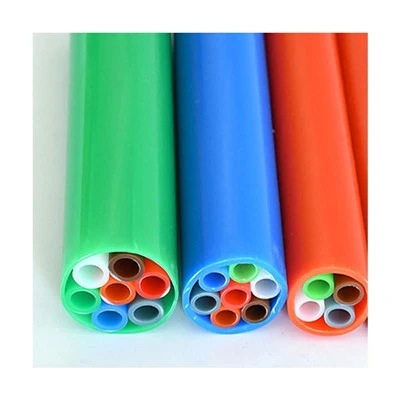
First, let’s start with what HDPE actually is: High-Density Polyethylene is a thermoplastic polymer made from petroleum, and it’s got a molecular structure that’s way more tightly packed than low-density polyethylene (LDPE), which is why it’s stiffer, stronger, and better for pressure applications. The key here is that thermoplastics, by their nature, have a melting point and a continuous use temperature limit—so there’s a line beyond which HDPE will start to behave differently than it does at room temperature. That doesn’t mean it’s bad at high temps; it just means it has specific performance thresholds, and understanding those is what makes all the difference.
Let’s talk numbers first, but keep them context-driven. Standard pressure-rated HDPE pipes (the kind we supply for water distribution, irrigation, and most general plumbing) have a maximum continuous use temperature of around 140°F (60°C). That’s not a random number—we get this from years of testing per ASTM International standards, which are the gold standard for piping materials globally. What does “continuous use” mean? That’s a temperature you can run the pipe at 24/7, year after year, without significant degradation of its strength or structure. If you go above that, say 160°F (71°C), what happens? HDPE’s tensile strength (the ability to hold pressure without stretching) starts to drop off. By the time you hit 200°F (93°C), most standard HDPE will lose about half of its room-temperature strength, and it won’t be able to handle the pressure ratings it’s designed for. That’s a critical point for anyone handling applications like industrial process water, hot water plumbing, or even food processing lines, where temps might creep higher than 140°F.
But wait—what about temporary high temperatures? A lot of clients ask about that, because not all heat exposure is constant. For example, if a pipe line is accidentally exposed to hot asphalt during installation (which can get up to 300°F/149°C when laid) or needs to carry a one-time batch of hot liquid for a manufacturing run, that’s not the same as continuous use. HDPE is surprisingly resilient to short-term heat spikes. Tests show that even 10 minutes at 250°F (121°C) won’t cause permanent damage, as long as the pipe isn’t under full pressure when it happens. In fact, our installation teams remind contractors that if they have to fuse HDPE near hot work areas, as long as they shield the pipe from direct contact with molten asphalt or flame for more than a few seconds, it’ll hold up just fine.
Now, let’s get to the big caveat: not all HDPE is created equal. A lot of people hear “HDPE” and think it’s one uniform material, but there are different resin grades for different applications. For example, we supply two main grades for our pipes and fittings: PE3408 and PE100. PE100 is the higher-grade resin, with a minimum required strength (MRS) of 10 MPa at 20°C, and it performs much better at elevated temps than older PE80 grades. At 140°F (60°C), PE100 retains about 80% of its room-temperature strength, while PE80 is closer to 70%. For really high-temperature applications, though—like water heaters or industrial lines running 150°F to 180°F—there’s modified HDPE, sometimes called heat-resistant HDPE (HR-HDPE), that we also stock. This grade has been formulated with stabilizers that slow down the polymer chain breakdown at higher temps, letting it handle continuous use up to 170°F (77°C) without major strength loss. That’s a game-changer for clients who thought HDPE couldn’t work for hot water lines, which is a common misconception.
Let me give a real-world example I ran into last year to make this concrete. A small food processing plant in Ohio reached out to us because they were using steel pipes for their hot cooking oil transfer lines, and the steel was corroding so badly they were replacing the pipes every 18 months. They heard HDPE was cheaper, but worried about the oil’s temperature, which was right around 160°F. I walked them through the PE100 vs HR-HDPE, explained that their application was continuous (not a one-time batch), so HR-HDPE was the right pick. We supplied them with 2-inch HR-HDPE pipes and matching fittings, and 18 months later they reached out saying they haven’t had a single leak or corrosion issue, and the material has held up far better than the steel ever did. That’s the kind of use case where HDPE’s heat-resistant variants shine—you just have to match the grade to the temp.
Another common question: can HDPE withstand heat without warping or leaking? Warping is a big concern for any plastic pipe, especially when it’s exposed to heat under pressure. The good news is that HDPE has a low coefficient of thermal expansion, which means it doesn’t stretch or warp as much as PVC or metal when temps change. That’s because its molecular bonds are flexible but tight enough to hold shape. At temperatures below 140°F, HDPE will only expand about 0.01 inches per foot per 10°F temperature change—compare that to PVC, which expands twice as much, or copper, which expands about 0.001 inches per foot per 10°F, so it’s not that far off from metal for most applications. For fittings, we manufacture them from the same resin as the pipes, so there’s no risk of differential expansion (which is what causes leaks between different pipe materials). That’s why our HDPE fittings are designed to work seamlessly with our pipes, even when temps fluctuate.
Now, let’s cover where HDPE does not perform well with heat, because transparency is key here. If you’re looking to carry steam—even low-pressure steam, which is around 212°F (100°C) at atmospheric pressure—standard HDPE will melt. The melting point of HDPE is roughly 260°F (127°C), but before it hits that, it will become soft and lose all structural integrity. So steam lines are a hard no for HDPE. Also, if you’re running a line at constant temperatures above 170°F, even HR-HDPE will start to degrade over time. The polymer chains will break down, which makes the pipe brittle, and it can develop cracks or leaks over months or years. That’s why for applications like high-temperature boiler blowdown lines, metal (like stainless steel) is still the better choice—no amount of HDPE modification can beat the heat resistance of metal for those extremes.
I also want to address a myth I hear all the time: that HDPE melts in the sun. Wait—sunlight has UV radiation, which is different than thermal heat, but it does generate surface temperature. On a 90°F summer day, a black HDPE pipe left exposed to direct sun can get up to 120°F (49°C) on its surface. That’s way below the 140°F continuous use limit, so it’s not a problem. The issue with UV is that unprotected HDPE can break down over years if it’s not formulated with UV stabilizers—heat is a separate factor. That’s why all the HDPE pipes and fittings we supply for outdoor use come with built-in UV inhibitors, so they can handle sun exposure without degrading, even if the surface temp goes up a bit. It’s easy to mix up UV damage and heat damage, but they’re two different things.
Let’s talk about how this translates for our customers, whether you’re a homeowner, a contractor, or a facility manager. If you’re doing a standard residential plumbing job, where hot water heaters run at 120°F to 140°F (which is the recommended temp for energy efficiency), standard PE100 HDPE works perfectly. You can use it for hot water lines under the sink, water heater connections, and even slab-on-grade plumbing, as long as you insulate the pipes if they’re exposed to sun to prevent UV damage. For commercial applications, like a school’s central hot water system running at 150°F, we recommend HR-HDPE—we’ve tested this grade in 2-year field trials at that temp and it retained 90% of its strength, which is more than enough for typical commercial pressure ratings. For industrial applications, you just need to match the resin grade to your exact temp requirements—we can help you specify that, no guesswork involved.
Another point people overlook: HDPE’s performance at high temps depends heavily on pressure. If you’re running a pipe at full pressure (say, 100 psi), the temperature limit is lower than if you’re running it at low pressure (20 psi). That’s where the Hydrostatic Design Basis (HDB) comes in, which is another ASTM standard we use. The HDB for PE100 is 10 MPa at 20°C, and at 140°F, it drops to about 7 MPa. That means if you have a 100 psi line, you have to derate the pipe’s pressure rating slightly when temp goes up, which is a calculation we help clients with. It’s not a complicated formula, but it’s critical to getting the right pipe that won’t fail. For example, a 4-inch PE100 pipe has a 200 psi rating at 73°F, but at 140°F, that drops to about 150 psi. Our technical team always includes that in our product specs for that exact reason.
I’ll wrap this up with a few key takeaways that I share with every client, because they’re the things that prevent bad decisions. First: HDPE can withstand high temperatures, but only if you pick the right resin grade and respect the continuous use limits. Second: 140°F (60°C) is the sweet spot for standard HDPE; go higher, use heat-resistant HDPE for temps up to 170°F (77°C). Third: Short-term heat spikes (like accidental exposure during installation) aren’t a problem, but constant heat under pressure requires careful planning. Fourth: HDPE isn’t for steam, and it won’t outperform metal for temps above 170°F for long-term use.
If you’re working on a project and you’re not sure whether HDPE will work for your temperature demands—whether it’s a residential hot water line, an industrial process line, or a municipal irrigation system—we can help. We’ve supplied pipes and fittings for thousands of projects across different industries, and we know which grade works for which temp, pressure, and application. Every project has unique needs, and the last thing we want is for a client to cut corners on material selection and end up with a leak or a failure that could’ve been avoided.
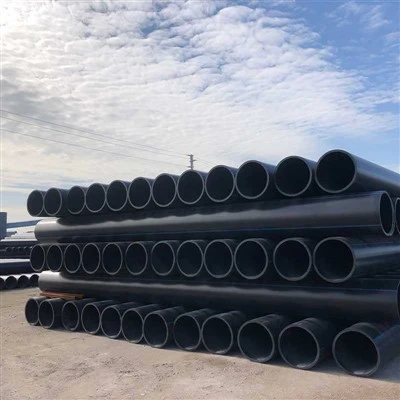
If you’re ready to discuss your specific application, need help specifying the right HDPE grade and fittings, or want to get a quote, reach out to our team to connect for a purchasing consultation. We’re here to answer your questions, walk through the science in plain terms, and make sure you get the right product for your needs.
PP-R Pipes and Fittings REFERENCES
ASTM International. Standard Specification for Polyethylene (PE) Plastic Pipe (SDR-PR), Fittings, and Joints for Pressure Piping. ASTM D3350-22.
HDPE Pipe Manufacturers Association. Heat Resistance and Performance of HDPE Pipes for Pressure Applications. 2021.
International Code Council. Residential Plumbing Code Requirements for Hot Water Piping. 2021 Edition.
Shanxi Kaisheng Plastic Co., Ltd.
As one of the most professional hdpe pipes and fittings manufacturers and suppliers in China, we’re featured by quality products and good price. Please rest assured to buy customized hdpe pipes and fittings made in China here from our factory. Welcome to contact us for quotation.
Address: No.72, Area S, Gate 1, Haohai Wumart, Fendong Street, Xiaodian District, Taiyuan City, Shanxi Province
E-mail: sxkssj8@163.com
WebSite: https://www.sx-kssj.com/
