Hey everyone, thanks for swinging by my little corner of the web. I’ve been supplying paper cross cutting machines for over 12 years now, and the question I get asked more than any other? “What’s the cost of a paper cross cutting machine?” It’s not a one-size-fits-all answer, and I’ve lost count of how many people come in expecting a super simple number—only to realize there are way more variables than they first think. Let me break this down like I would chat with a friend over a coffee, no stuffy industry jargon, just the straight talk you need if you’re in the market. Paper Cross Cutting Machine
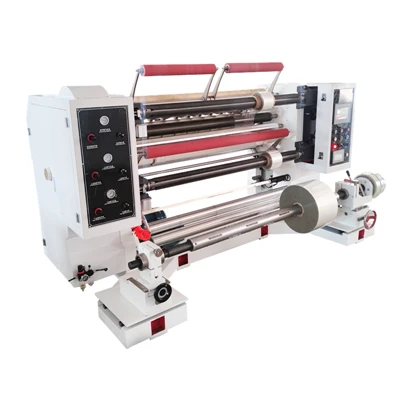
First off, let’s get clear on what a paper cross cutting machine actually does, for the new folks here. It’s the workhorse for any business that cuts big, jumbo rolls of paper into smaller, usable sizes—think office copy paper, packaging materials, even things like cardstock for craft projects. If you’re a small print shop, a packaging startup, or a big corrugated factory, this machine is make or break. But its cost isn’t just the machine itself; there are a bunch of hidden bits that tie into that price tag too.
Let’s start with the biggest factor: the type of machine. Not all cross cutters are equal. The entry-level ones I sell are for small shops doing maybe 5,000 to 10,000 pounds of paper a month. These are usually semi-automated, made for folks who don’t have a huge budget but need something reliable, not a toy. That entry range? It’s roughly $3,500 to $12,000. Wait, that’s a huge gap, right? Yeah, even in the entry level, there’s a difference between a desktop semi-auto (good for tiny home-based businesses) and a floor model that can handle heavier rolls. I’ve had a guy come in last year with a 2-person print shop, only cutting 10 reams a week—he ended up with one of the smaller entry machines for $4,200, and it’s worked perfect for him.
Then there’s the mid-range. That’s for businesses doing 10,000 to 50,000 pounds a month, needing more speed, accuracy, and durability. These are fully automated, have computer controls so you can program cut sizes without manually adjusting every time, and can handle wider paper rolls—up to 60 inches, sometimes more. The mid-range runs from $12,000 to $45,000. I sold a mid-range machine last quarter to a packaging company that was scaling up; they were using a slow, entry-level one that was holding their production back, so the mid-range was a no-brainer. They paid $28,000, and their output jumped 3x almost immediately.
The big boys are the industrial-grade cross cutters. These are for factories doing 50,000+ pounds a month, 24/7 operation. They’re built like tanks, have features like automatic roll loading, error detection, and can handle specialty materials like coated paper, cardboard, even thin plastic film if you need that. These start around $45,000 and can go all the way up to $150,000—sometimes more if you want custom add-ons for super specific jobs. Last year, a big corrugated plant came to me needing a machine that could handle 8-foot wide rolls; we had to custom build a lot of the controls for their line, so that ended up being $120,000 for them. That’s not for everyone, but when you’re running nonstop, you need that reliability.
Next up, the size and capacity of the machine, which ties into the range I just mentioned. A machine that can cut a 12-inch wide roll is way cheaper than one that does 70 inches, right? Also, the cut accuracy matters. Entry-level machines have a tolerance of maybe +/- 0.02 inches, which is fine for regular copy paper, but if you’re cutting label stock or cardstock for book covers, you need a tolerance of +/- 0.005 inches, and that’ll bump the price up. Speed too—entry-level is like 100 cuts per minute, mid-range is 200-300, industrial is 400+ cuts a minute. The faster you need to go, the more it costs, simple as that.
Now, let’s talk about the hidden costs, because this is where a lot of buyers get caught off guard. I can’t tell you how many times someone calls me and says “I saw a machine for $3k online, is that a good deal?” and then 2 weeks later they’re asking about blades, maintenance, and installation. First, installation. For a small entry machine, it’s usually plug-and-play, so installation is like $0 or a few hundred bucks if you want someone to set it up. But mid-range and industrial machines need professional installation—they’re heavy, require electrical upgrades sometimes, and need calibration to get the cuts right. That can be $1,000 to $5,000, depending on the machine size.
Then there’s blades and parts. The cutting blade is the most important part, and it’s a consumable. A good blade for an entry machine is $50-$100, mid-range is $150-$300, industrial blades can be $500+. You’ll need to replace them every few months, depending on how much you use the machine. Also, regular maintenance: oil changes, belt replacements, software updates for automated models. That’s not a big yearly cost—maybe 2-5% of the machine’s price—but it’s something to plan for, not just the upfront cost.
Software and automation add-ons. If you get a mid-range machine, the basic computer control is usually included, but if you want things like remote monitoring, integration with your existing ERP system, or automated roll changing, that’ll add 10-20% to the machine’s price. Last year, a customer wanted to tie his cross cutter to his inventory system so when a roll runs low, it automatically orders paper. That extra integration cost him $3,000 on top of the $25,000 machine, but it saved him so much time he didn’t mind.
Wait, also, do you need training? A lot of entry machines are super intuitive, so no training needed, but industrial machines with all those automated features? You’ll need at least a day of training, and if you have a big team, maybe 2 days. That’s another $500-$2,000, depending on the machine. I always include basic training for my mid and industrial machines, but some cheaper suppliers don’t, so that’s something to check.
Now, let’s talk about factors that can make the cost go up or down. Brand matters, right? I sell my own brand of machines, but I know what the competitors charge. The cheap no-name machines from overseas might be $2,000 less than mine, but they break down way more often. A friend of mine runs a print shop that bought a $3,000 no-name machine; it broke after 6 months, and the parts weren’t available, so they had to buy a new one. For small businesses, downtime kills—one day of no production can cost more than the difference between a good machine and a cheap one. So you’re not just paying for the machine, you’re paying for reliability, parts availability, and support. That’s why my machines are a bit more, but I stand behind them.
New vs used. A lot of buyers ask about used machines, and that can be a good option if you know what you’re doing. A used entry-level machine might be $1,500-$2,500, mid-range used is $8,000-$25,000, industrial used is $30,000-$70,000. But there’s a catch: when you buy used, you don’t have a warranty, and if the machine has hidden issues (like a worn blade mechanism), you’ll end up spending more on repairs. I only sell new, but I work with a couple of trusted suppliers who offer refurbished machines with a 6-month warranty, which is a good middle ground if you’re on a tight budget.
Customization is another big one. If you need a machine that can handle super heavy paper, or specialty cuts like perforations or embossing, that’ll add to the cost. For example, a standard mid-range machine cuts straight, but if you want it to add perforations for tear-off sheets, that’s an extra $1,500-$3,000. I had a customer who needed to cut paper for gift boxes, so we added a rotary cut feature to his machine—cost him an extra $4,000, but it made his box production way faster.
Let me give you a couple of real examples to make this concrete. Last year, I had a customer named Mia who runs a 3-person stationery shop. She was cutting her paper by hand, and it was taking her 5 hours a day. She needed something small, reliable, and cheap. We went with an entry-level floor model, no frills, for $4,800. Installation was $200, first blade was $75. All in, she spent $5,075, and now she cuts her paper in 30 minutes a day. That’s a no-brainer for her.
Another example: a manufacturing client, Jake, who runs a packaging plant with 20 employees, running 2 shifts. His old machine was old, slow, and had a 10% error rate, which was costing him thousands in waste every month. We went with a mid-range automated machine, with a cut tolerance of +/- 0.005 inches, and integration with his inventory system. The machine was $29,000, installation was $2,500, training was included, and he got a 1-year warranty. All in, he spent $31,500, and his waste dropped to 1%, saving him $1,200 a month—so he paid back his cost in 2 and a half months. That’s the kind of return on investment I love to see.
Now, what about things that don’t affect the cost as much, but still matter? Warranty. A lot of cheap machines have a 30-day warranty, while mine have a 1-year full warranty on parts and labor, and extended warranties for up to 3 years. That peace of mind is worth it, especially if you’re running your business on tight margins. I had a customer whose machine’s motor broke at 11 months; under warranty, we fixed it for free, and he didn’t have to pay for downtime. If he had bought a cheaper machine, he would’ve had to pay $2,000 for a new motor.
Also, after-sales support. If your machine breaks at 2 a.m. on a Sunday, you need someone to call who’ll answer. I have a 24/7 support line for all my customers, so even if something goes wrong on a weekend, I can walk your team through fixing it, or send a tech within 48 hours. A lot of overseas suppliers don’t do that—their support is only during business hours in their country, so if you’re in North America, that’s like midnight for them, and you’re stuck waiting.
Wait, let’s address a common myth: you don’t need the biggest, fastest machine right away. A lot of new business owners think they need an industrial machine from day one, but that’s just wasting money. Start with an entry or mid-range machine that fits your current production, and upgrade later when you need to. I see so many startups overspending on a machine they don’t need, and then struggling with cash flow for months. Buy what you need now, leave room to grow if you need it.
Another thing: material type. If you’re only cutting plain office paper, you can get away with a cheaper machine. But if you’re cutting coated paper, cardstock, or corrugated, you need a machine with a stronger motor and a harder blade. Coated paper dulls blades way faster, so that’s something to factor in—cheaper machines can’t handle coated material as well, so if that’s what you’re working with, you might end up spending more on blade replacements, which makes a slightly more expensive machine a better deal in the long run.

So putting it all together, let’s break down the total cost you can expect, depending on your business size:
- Small business / home-based (under 10,000 lbs/month): Total cost = $3,500 to $10,000. That includes machine, maybe installation, first blade, and a basic warranty.
- Mid-sized business (10,000 to 50,000 lbs/month): Total cost = $12,000 to $45,000. Includes automated machine, installation, training, and 1-year warranty.
- Industrial / large factory (50,000+ lbs/month): Total cost = $45,000 to $150,000+. Includes heavy-duty machine, professional installation, custom features, and extended warranty.
Foil Rewinding Machine Now, I know this is a lot to take in, and every business is different. Maybe you’re not sure which machine fits your needs, or you have questions about hidden costs, or you’re looking for a quote tailored to your production. That’s what I’m here for. If you’re ready to stop guessing and get a straight answer on what you need, or want to compare options without the sales pitch, reach out to me. I’ll walk you through exactly what a machine would cost for your specific workload, no pressure, no hidden fees. I’ve helped hundreds of print shops, packaging companies, and small businesses pick the right machine for their budget, and I’d love to help you too.
References
- Paper and Paperboard Converting Machinery Association. (2022). "Market Analysis of Cross-Cutting Machines for Small to Medium Enterprises."
- Global Packaging Solutions Report. (2023). "Cost Factors for Industrial Paper Processing Equipment."
- U.S. Small Business Administration. (2021). "Equipment Purchasing Guide for Manufacturing Startups."
- International Organization for Standardization (ISO). (2022). "Performance Standards for Paper Cutting Machine Accuracy and Durability."
Wenzhou Sanhui Machinery Manufacturing Co., Ltd.
Wenzhou Sanhui Machinery Manufacturing Co., Ltd. is one of the most professional paper cross cutting machine manufacturers and suppliers in China. We have world-leading production equipment and strong manufacturing capabilities. Please feel free to wholesale advanced paper cross cutting machine made in China here from our factory. Customized orders are welcome.
Address: B17-8, Mechanical Industry Park, Wanquan Light Industry Production Base, Wanquan Town, Pingyang County, Wenzhou City, Zhejiang Province
E-mail: sanhui.slittingmachine@gmail.com
WebSite: https://www.sanhuislittingmachine.com/
