As a supplier of output shafts, I’ve seen firsthand how crucial it is to understand the factors that affect the fatigue life of these components. Output shafts are a vital part of many mechanical systems, transferring power from the engine or motor to the driven equipment. Their fatigue life can significantly impact the overall performance and reliability of the machinery. In this blog, I’ll delve into the key factors that influence the fatigue life of an output shaft and how we, as a supplier, address these issues to provide high – quality products. Output Shaft
Material Properties
The choice of material for an output shaft is fundamental in determining its fatigue life. Different materials have varying levels of strength, ductility, and resistance to fatigue. For instance, steel is a commonly used material for output shafts due to its high strength and good fatigue resistance. Alloy steels, in particular, offer enhanced properties compared to plain carbon steels. They contain elements such as chromium, nickel, and molybdenum, which improve the material’s hardenability, toughness, and fatigue strength.
The heat treatment process also plays a crucial role. Proper heat treatment can refine the grain structure of the material, increasing its strength and hardness. For example, quenching and tempering can significantly improve the fatigue resistance of a steel output shaft. Quenching rapidly cools the heated shaft, forming a hard martensitic structure, while tempering reduces the brittleness of the martensite and improves its toughness.
However, the material’s quality and purity are equally important. Impurities such as sulfur and phosphorus can reduce the fatigue life of the shaft. Sulfur can form sulfide inclusions, which act as stress raisers and initiate fatigue cracks. Therefore, we carefully select high – quality materials with low impurity levels and perform strict quality control during the manufacturing process.
Design and Geometry
The design and geometry of an output shaft have a profound impact on its fatigue life. Stress concentrations are a major concern. Sharp corners, keyways, and sudden changes in cross – section can create areas of high stress, which are more likely to initiate fatigue cracks. For example, a sharp corner at the transition between a shaft diameter and a shoulder can cause stress concentrations that are several times higher than the nominal stress.
To minimize stress concentrations, we use fillets and radii at critical locations. A well – designed fillet can distribute the stress more evenly, reducing the likelihood of crack initiation. Additionally, the shape of the shaft can be optimized to ensure uniform stress distribution. For example, a tapered shaft can be designed to gradually transfer the load, reducing stress concentrations.
The size and length of the output shaft also matter. Longer shafts are more prone to bending and torsional stresses, which can accelerate fatigue. Therefore, we design shafts with appropriate lengths and diameters based on the specific application requirements. We also consider the alignment of the shaft with other components in the system. Misalignment can cause additional stresses on the shaft, leading to premature fatigue failure.
Surface Finish
The surface finish of an output shaft is another important factor affecting its fatigue life. A rough surface can act as a stress raiser, promoting crack initiation. Surface defects such as scratches, pits, and burrs can create areas of high stress concentration, reducing the shaft’s fatigue resistance.
We pay great attention to the surface finish of our output shafts. We use advanced machining and finishing processes to achieve a smooth surface. For example, grinding and polishing can improve the surface finish, reducing the likelihood of crack initiation. Additionally, surface treatments such as nitriding or carburizing can enhance the surface hardness and wear resistance of the shaft, further improving its fatigue life.
Operating Conditions
The operating conditions of an output shaft have a significant impact on its fatigue life. Load is one of the most critical factors. High – magnitude loads can cause high stresses on the shaft, increasing the rate of fatigue crack growth. Cyclic loading, in particular, can lead to fatigue failure over time. The frequency of the cyclic loading also matters. Higher frequencies can cause more rapid fatigue crack growth.
Temperature is another important operating condition. High temperatures can reduce the material’s strength and fatigue resistance. For example, at elevated temperatures, the material may experience creep, which can lead to permanent deformation and premature failure. On the other hand, low temperatures can make the material more brittle, increasing the risk of crack propagation.
Lubrication is also crucial for the fatigue life of an output shaft. Proper lubrication can reduce friction and wear between the shaft and other components, minimizing the stress on the shaft. It can also prevent corrosion, which can weaken the material and initiate fatigue cracks. We provide recommendations on lubrication for our output shafts based on the specific application and operating conditions.
Manufacturing Processes
The manufacturing processes used to produce an output shaft can also affect its fatigue life. Machining operations such as turning, milling, and drilling can introduce residual stresses in the shaft. These residual stresses can either increase or decrease the fatigue life of the shaft, depending on their magnitude and distribution.
For example, compressive residual stresses can improve the fatigue resistance of the shaft by counteracting the applied tensile stresses. We use techniques such as shot peening to introduce compressive residual stresses on the surface of the shaft. Shot peening involves bombarding the shaft surface with small spherical particles, which creates a layer of compressive stress.
Welding, if used in the manufacturing process, can also have an impact on the fatigue life of the shaft. Welds can introduce defects such as porosity, cracks, and residual stresses, which can reduce the fatigue resistance of the shaft. Therefore, we use high – quality welding techniques and perform strict quality control on the welds to ensure their integrity.
Maintenance and Inspection
Regular maintenance and inspection are essential for extending the fatigue life of an output shaft. Maintenance activities such as lubrication, alignment checks, and replacement of worn components can help prevent premature fatigue failure. Inspection techniques such as non – destructive testing (NDT) can be used to detect early signs of fatigue cracks.
We provide our customers with detailed maintenance and inspection guidelines for our output shafts. We also offer training and support to ensure that our customers can properly maintain and inspect their shafts. By following these guidelines, our customers can maximize the fatigue life of their output shafts and reduce the risk of unexpected failures.
In conclusion, the fatigue life of an output shaft is influenced by a variety of factors, including material properties, design and geometry, surface finish, operating conditions, manufacturing processes, and maintenance and inspection. As a supplier, we take all these factors into account to provide high – quality output shafts that meet the specific requirements of our customers.
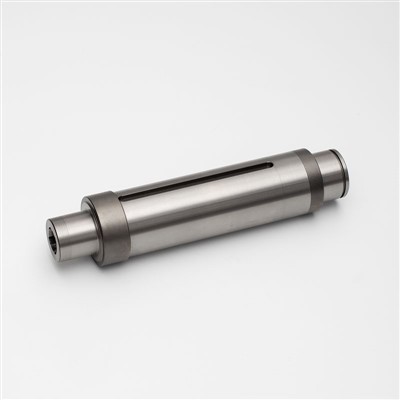
If you’re in the market for output shafts and want to ensure long – lasting performance and reliability, we’d love to discuss your needs. Our team of experts can provide you with customized solutions based on your application. Don’t hesitate to reach out for a procurement discussion and let us help you find the perfect output shaft for your machinery.
Automotive Parts References
- Metals Handbook, Volume 1: Properties and Selection: Irons, Steels, and High – Performance Alloys, ASM International
- Mechanical Engineering Design, 9th Edition, Joseph E. Shigley, Charles R. Mischke, Richard G. Budynas
- Fatigue of Materials, 3rd Edition, Richard W. Hertzberg, Richard P. Vinci, John L. Hertzberg
Taizhou Liuhuan Machinery Co., Ltd.
As one of the most professional output shaft manufacturers and suppliers in China, we’re featured by quality products and good service. Please rest assured to buy customized output shaft made in China here from our factory. For quotation, contact us now.
Address: Xinyuan Industrial Zone, Damaiyu Street, Yuhuan City, Zhejiang Province,China
E-mail: tzlhmachining@gmail.com
WebSite: https://www.tzlhmachining.com/
