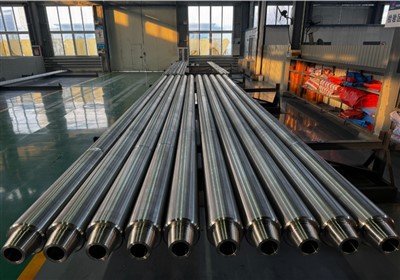
Hey there! I’m a supplier of Non-Magnetic Subs, and today I wanna talk about the dimensional tolerance of Non-Magnetic Subs. It’s a topic that might seem a bit technical at first, but it’s super important in our field. Non-Magnetic Subs

So, what exactly is dimensional tolerance? Well, in simple terms, it’s the allowable variation in the size and shape of a part. When it comes to Non-Magnetic Subs, dimensional tolerance plays a crucial role in ensuring that these components fit perfectly into the larger systems they’re used in.
Let me give you a bit of background. Non-Magnetic Subs are used in a variety of industries, especially in the oil and gas sector. They’re used in drilling operations because they don’t interfere with the magnetic measurements taken downhole. These measurements are essential for guiding the drill bit to the right location, so the accuracy of the Non-Magnetic Subs is key.
Now, the dimensional tolerance of Non-Magnetic Subs is determined by a few factors. First off, the manufacturing process has a big impact. We use different methods to make these subs, like machining, forging, and casting. Each method has its own level of precision.
Machining is a really precise way to make Non-Magnetic Subs. With modern CNC machines, we can control the dimensions to a very high degree. For example, we can achieve a dimensional tolerance of plus or minus a few thousandths of an inch. But this process can be time – consuming and expensive, so we usually use it for parts that need extremely tight tolerances.
Forging, on the other hand, is a process where we heat the metal and shape it using a hammer or a press. It’s a great way to make parts with good strength, but the dimensional tolerance is usually not as tight as with machining. We can typically get a tolerance of plus or minus a few hundredths of an inch with forging.
Casting involves pouring molten metal into a mold. It’s a fast and cost – effective way to make parts, but it has the least precise dimensional control. The tolerance can be in the range of plus or minus a few tenths of an inch.
But it’s not just the manufacturing process that affects the dimensional tolerance. The material we use also matters. Non-Magnetic Subs are often made from materials like stainless steel, which has good non – magnetic properties. Different grades of stainless steel have different characteristics, and some are more difficult to machine to tight tolerances. For instance, some high – alloy stainless steels can be a bit more brittle, which might lead to more variability in the final dimensions.
Another factor is the design of the Non – Magnetic Sub itself. Complex designs with lots of features, like threads, holes, and grooves, are harder to make within tight tolerances. We have to take into account things like the depth of the threads, the diameter of the holes, and the width of the grooves. Each of these features adds a level of complexity to the manufacturing process and can affect the overall dimensional tolerance.
In the oil and gas industry, the requirements for dimensional tolerance of Non – Magnetic Subs are pretty strict. The subs need to fit precisely into the drill string, and any deviation from the specified dimensions can cause problems. For example, if the outer diameter of the sub is too large, it might not fit through the wellbore. If it’s too small, it could lead to leaks and loss of drilling fluid.
So, how do we ensure that our Non – Magnetic Subs meet the required dimensional tolerances? Well, we have a quality control process in place. We use precision measuring tools like calipers, micrometers, and coordinate measuring machines (CMMs). Calipers are great for getting quick measurements of basic dimensions like length and diameter. Micrometers are more precise and can measure to within a few thousandths of an inch. CMMs are the most advanced. They can measure the three – dimensional shape of a part with extremely high accuracy.
We also do inspections at various stages of the manufacturing process. We check the raw materials before we start working on them to make sure they meet our quality standards. Then, during the manufacturing process, we take regular measurements to make sure that the parts are staying within the specified tolerances. And finally, before the parts are shipped out, we do a final inspection to ensure that they’re perfect.
Now, I know that as a buyer, you’re probably wondering about the trade – off between cost and dimensional tolerance. Tighter tolerances generally mean higher costs. This is because they require more precise manufacturing processes and more rigorous quality control. But it’s important to find the right balance. If you go for super – tight tolerances when you don’t really need them, you’ll end up paying more than you have to. On the other hand, if you go for looser tolerances than what your application requires, you might run into problems down the line.
For example, if you’re doing a simple drilling job where the fit of the Non – Magnetic Sub isn’t as critical, you might be able to get away with a slightly looser tolerance. But if you’re doing a high – precision drilling operation, like directional drilling or horizontal drilling, you’ll need a sub with a very tight dimensional tolerance.
As a supplier, I’m always here to help you figure out the right dimensional tolerance for your specific needs. I’ve been in this business for a while, and I’ve seen all kinds of applications. I can look at your requirements, understand the nature of your project, and recommend the best option for you.
If you’re in the market for Non – Magnetic Subs and you have questions about dimensional tolerance or any other aspect of these products, don’t hesitate to reach out. I’d be more than happy to have a chat with you, answer your questions, and work with you to find the perfect solution for your project. Whether you’re a small drilling company or a large oil and gas corporation, I’m committed to providing you with high – quality Non – Magnetic Subs that meet your exact needs.
So, if you think we could work together, just drop me a line. Let’s start a conversation about your requirements and see how we can make your project a success.
Non-Magnetic Tools for Coal References:
- "Manufacturing Processes for Engineering Materials" by Serope Kalpakjian and Steven R. Schmid
- "Quality Control and Industrial Statistics" by A. J. Duncan
Shanxi Zhonghe Non-Magnetic Drill Tool Co., Ltd.
Address: No.168 Fenglei Street, Houma City, Linfen City, Shanxi Province, China.
E-mail: lucy@nmdrillcollar.com
WebSite: https://www.zhnmdc.com/
