When it comes to evaluating plastic inserts, one of the most crucial properties that often comes under scrutiny is tear resistance. As a supplier of plastic inserts, I’ve witnessed firsthand the significance of this characteristic in various industries. In this blog, I’ll delve into the world of plastic inserts and explore whether they possess good tear resistance. Plastic Insert

Understanding Tear Resistance in Plastic Inserts
Tear resistance refers to a material’s ability to resist the propagation of a tear when a force is applied. For plastic inserts, this property is vital as they are often subjected to various stresses during their lifecycle, including installation, handling, and in – use conditions.
The tear resistance of plastic inserts is influenced by several factors. Firstly, the type of plastic resin used plays a fundamental role. Different plastics have different molecular structures, which directly impact their tear – resistant capabilities. For example, thermoplastics like polyethylene and polypropylene have distinct tear behaviors. High – density polyethylene (HDPE) generally has better tear resistance compared to low – density polyethylene (LDPE). This is because HDPE has a more crystalline structure with stronger intermolecular forces, making it more difficult for a tear to propagate through the material.
Another factor is the manufacturing process. Injection molding, extrusion, and thermoforming are common methods used to produce plastic inserts. The way these processes are carried out can affect the orientation of the polymer chains in the plastic. In injection molding, for instance, proper design of the mold and control of the injection parameters can lead to a more uniform distribution of polymer chains, enhancing tear resistance. If the polymer chains are well – aligned in the direction of stress, the insert is better able to withstand tearing forces. Additionally, annealing, which is a post – manufacturing heat – treatment process, can sometimes improve the tear resistance of plastic inserts by reducing internal stresses within the material.
Testing Tear Resistance
To determine whether plastic inserts have good tear resistance, various testing methods are employed. One of the most commonly used tests is the Elmendorf tear test. In this test, a specimen of the plastic insert is notched and then clamped in a pendulum – type device. The pendulum swings and tears the specimen, and the amount of energy required to tear the material is measured. This energy value provides an indication of the tear resistance of the plastic.
Another test is the trouser tear test. Here, a rectangular specimen of the plastic insert is cut in a ‘trouser’ shape and the two legs of the ‘trouser’ are pulled apart at a constant speed. The force required to continue tearing the specimen throughout its length is recorded. This test is useful for understanding the tear behavior of the plastic under a relatively constant rate of tearing.
These tests are standardized by organizations such as ASTM (American Society for Testing and Materials). By following these standards, manufacturers can ensure consistent and accurate measurement of the tear resistance of their plastic inserts.
Applications and the Importance of Tear Resistance
The tear resistance of plastic inserts is crucial in many applications. In the automotive industry, plastic inserts are used in various components such as door panels, dashboard trims, and seat covers. These inserts need to withstand the rigors of daily use, including the pulling and pushing forces applied by passengers. A plastic insert with poor tear resistance may develop cracks or tears over time, leading to a compromised appearance and functionality of the vehicle interior.
In the packaging industry, plastic inserts are used to protect and separate products within a package. For example, in electronic device packaging, the plastic inserts need to hold the delicate components securely. If the insert tears easily, it may fail to protect the product during transportation and handling, resulting in damage to the item.
Medical device manufacturers also rely on plastic inserts for a variety of applications, such as holding medical instruments or providing patient – contact surfaces. In these cases, the tear resistance of the plastic insert is not only important for the proper functioning of the device but also for ensuring patient safety. A torn plastic insert could potentially release sharp fragments or allow contaminants to enter the device, posing a risk to the patient.
Advantages of Plastic Inserts with Good Tear Resistance
Plastic inserts with good tear resistance offer several advantages. Firstly, they have a longer service life. Since they can withstand tearing forces, they are less likely to fail prematurely compared to inserts with poor tear resistance. This means that products incorporating these inserts will require less frequent replacement, reducing costs for both manufacturers and end – users in the long run.
Secondly, they enhance product reliability. In critical applications, such as aerospace or automotive safety components, the reliability of plastic inserts is of utmost importance. A high – tear – resistant insert is more likely to perform its intended function consistently, reducing the risk of system failures and associated safety hazards.
From a manufacturing perspective, good tear resistance can also simplify the production process. Inserts that are less prone to tearing are easier to handle during assembly, reducing the likelihood of production line stoppages due to damaged parts.
Challenges in Achieving High Tear Resistance
However, achieving high tear resistance in plastic inserts is not without its challenges. One of the main challenges is finding the right balance between tear resistance and other properties such as stiffness, flexibility, and cost. For example, some additives that can improve tear resistance may also increase the stiffness of the plastic, making it less suitable for applications where flexibility is required.
Another challenge is the environmental impact. Some of the materials and processes used to enhance tear resistance may be less environmentally friendly. For instance, certain chemical additives may not be biodegradable or may release harmful substances during production or disposal. As a result, manufacturers need to explore sustainable alternatives while still maintaining acceptable tear resistance levels.
Our Role as a Plastic Insert Supplier
As a plastic insert supplier, we are constantly working to improve the tear resistance of our products. We invest in research and development to select the most appropriate plastic resins and manufacturing processes. By collaborating closely with material suppliers, we are able to source high – quality plastics that offer excellent tear – resistant properties.
Our quality control team conducts regular tear – resistance tests on our products using the standardized methods mentioned earlier. This ensures that every plastic insert leaving our facility meets the required tear – resistance standards. We also offer customization services, allowing us to tailor the tear resistance of our inserts to the specific needs of our clients. Whether it’s a high – stress application in the automotive industry or a delicate packaging requirement, we can develop a plastic insert with the appropriate tear – resistant characteristics.
Conclusion
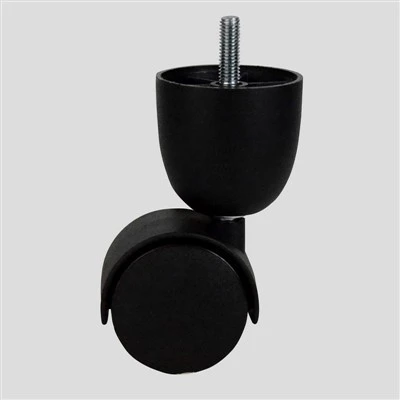
In conclusion, plastic inserts can have good tear resistance, but it depends on a variety of factors such as the type of plastic used, the manufacturing process, and post – manufacturing treatments. Good tear resistance is essential for a wide range of applications, offering benefits such as longer service life, enhanced reliability, and simplified production.
Plastic Adjustable Feet As a plastic insert supplier, we are committed to providing products with excellent tear – resistant properties. If you are in need of high – quality plastic inserts for your business, we would be more than happy to discuss your requirements. Our team of experts can help you select the right plastic insert with the optimal tear resistance for your specific application. Contact us to start a conversation about your plastic insert needs and let’s explore how we can work together to fulfill your requirements.
References
- ASTM International. (Standards for tear resistance testing of plastics).
- "Plastic Materials and Technology" by Charles A. Harper.
- "Handbook of Plastics Testing and Failure Analysis" by Rosato et al.
Bai Ye Industrial Co., Ltd.
With abundant experience, we are one of the most professional plastic insert manufacturers and suppliers. We warmly welcome you to buy discount plastic insert for sale here from our factory. All customized products are with high quality and low price. Contact us for quotation.
Address: No.178, Sec. 2, Zhangyuan Rd., Huatan Township, Changhua County 503, Taiwan (R.O.C.)
E-mail: judy@ku-ping.com.tw
WebSite: https://www.baiyemfg.com/
