In the industrial machinery world, the performance of equipment is often judged by multiple parameters, and one such crucial yet often overlooked factor is the noise level during operation. Today, as a slide gate valve supplier, I’d like to delve deep into the noise level of slide gate valves during their operation, exploring the influencing factors, measurement methods, and the significance of keeping noise in check. Slide Gate Valve
Understanding Slide Gate Valves
Before we jump into the noise aspect, let’s briefly understand what a slide gate valve is. A slide gate valve is a type of valve that uses a flat gate to control the flow of various substances, including liquids, gases, and bulk solids. Its working principle is simple: the gate slides across the opening, fully opening, partially opening, or closing the passage. The valve is commonly used in industries such as mining, power generation, chemical processing, and food production due to its durability, simple design, and the ability to handle high – pressure and high – temperature applications.
Factors Affecting the Noise Level of Slide Gate Valves
Fluid Characteristics
The nature of the fluid passing through the slide gate valve significantly impacts the noise level. For instance, when dealing with high – velocity fluids, the turbulence created as the fluid flows around the gate can generate noise. High – pressure fluids can also lead to more intense vibrations and noise. In gas applications, the compressibility of the gas can cause pressure fluctuations, resulting in acoustic emissions. When the gas experiences sudden expansion or contraction as it passes through the valve, shock waves can form, which are a major source of noise.
In the case of bulk solids handling, the abrasiveness and particle size of the solids can factor in. Larger and more abrasive particles can cause more wear on the valve components, leading to uneven surfaces. As the gate slides across these uneven surfaces, it can generate additional noise compared to handling fine or non – abrasive materials.
Valve Design and Construction
The design and construction of the slide gate valve play a vital role in determining its noise characteristics. A well – designed valve with smooth internal surfaces and a proper gating mechanism will generally produce less noise. The quality of the materials used also matters. For example, valves made from high – grade metals with good damping properties can absorb some of the vibrations and reduce noise.
The type of seal used in the valve can affect noise levels as well. A poor – fitting or worn – out seal can allow fluid to leak past the gate, creating a hissing sound. On the other hand, a properly designed and maintained seal can prevent such leaks and minimize noise.
The shape and size of the valve opening and the movement pattern of the gate are also significant factors. A valve with a narrow opening may cause the fluid to accelerate more, generating more noise compared to a valve with a wider opening at the same flow rate. Additionally, if the gate moves smoothly and steadily without any jerks or stops, it will produce less noise than a gate that moves erratically.
Installation and Operating Conditions
Improper installation of the slide gate valve can lead to increased noise levels. If the valve is not properly aligned with the pipeline, it can cause stress on the valve components and create vibrations. Loose mounting bolts or inadequate support can also contribute to noise. Vibration from nearby equipment can be transferred to the slide gate valve, amplifying the noise.
The operating conditions, such as the frequency of valve operation, also affect noise. Frequent opening and closing of the valve can cause more wear and tear on the components, leading to an increase in noise over time. Moreover, if the valve is operated at extreme temperatures or pressures outside its design limits, it can generate abnormal levels of noise.
Measuring the Noise Level of Slide Gate Valves
To effectively manage and mitigate the noise from slide gate valves, it is essential to measure the noise level accurately. There are several methods used for noise measurement in industrial settings.
One common approach is to use a sound level meter. The sound level meter is placed at a specific distance from the valve, usually in accordance with industry standards. The measurements are taken over a period of time to capture the average noise level during different phases of valve operation, such as opening, closing, and steady – state flow.
In more advanced scenarios, acoustic sensors can be installed around the valve to obtain detailed noise profiles. These sensors can detect the frequency spectrum of the noise, which helps in identifying the sources of noise. For example, a high – frequency noise may indicate turbulence in the fluid, while a low – frequency noise could be due to mechanical vibrations of the valve components.
Two common units for expressing noise levels are the decibel (dB) and the A – weighted decibel (dBA). The dB is a logarithmic unit that measures the sound pressure level relative to a reference. The dBA scale is an adjusted scale that takes into account the sensitivity of the human ear to different frequencies. In most industrial applications, noise levels are reported in dBA because it provides a more relevant measure of how loud the noise is perceived by humans.
Importance of Controlling Noise Levels
The importance of controlling the noise level of slide gate valves extends beyond just providing a comfortable working environment.
Occupational Health and Safety
High – noise levels can have a severe impact on the health of workers in industrial settings. Prolonged exposure to noise above 85 dBA can lead to hearing loss, tinnitus, and other auditory problems. In addition to the physical effects, excessive noise can cause stress, distraction, and reduced productivity among workers. By keeping the noise level of slide gate valves in check, companies can ensure the well – being of their employees and maintain a safe working environment.
Equipment Longevity
Noise can be an indicator of problems within the valve. Excessive noise often means that there are abnormal vibrations or wear and tear on the valve components. By monitoring and reducing noise levels, maintenance teams can detect potential issues early and take corrective actions. This can prevent more serious damage to the valve, extend its service life, and reduce the overall cost of maintenance and replacement.
Environmental Impact
In some cases, industrial noise can have an impact on the surrounding environment. Noise pollution can disturb wildlife, especially in areas close to industrial sites. Additionally, strict environmental regulations in many regions set limits on the amount of noise that can be emitted by industrial facilities. By controlling the noise level of slide gate valves, companies can ensure compliance with these regulations and minimize their environmental footprint.
Mitigation Strategies for Reducing Noise
Design Improvements
One effective way to reduce the noise of slide gate valves is through design improvements. Manufacturers can optimize the internal geometry of the valve to reduce fluid turbulence. For example, rounded edges and smooth transitions in the valve passage can help to streamline the flow of fluid, reducing the generation of noise.
Using materials with better damping properties can also help absorb vibrations and reduce noise. Composite materials or special alloys can be used in valve construction to achieve this purpose. Additionally, improvements in the gating mechanism, such as designing a gate that moves more smoothly and with less friction, can contribute to noise reduction.
Installation and Maintenance
Proper installation is crucial for minimizing noise. Ensuring that the valve is correctly aligned with the pipeline and securely mounted can reduce vibrations. Using vibration – isolating mounts or flexible couplings can further dampen vibrations and prevent their transfer to the surrounding structures.
Regular maintenance is also essential. Replacing worn – out seals, checking and tightening bolts, and lubricating moving parts can help keep the valve operating smoothly and quietly. Inspecting the valve for signs of wear and tear and making timely repairs can prevent noise levels from increasing over time.
Why Choose Our Slide Gate Valves for Quieter Operation
As a slide gate valve supplier, we understand the importance of noise control in industrial applications. Our slide gate valves are designed with noise reduction in mind. We use advanced design techniques and high – quality materials to minimize fluid turbulence and vibrations. Our valves are precision – engineered to ensure smooth operation, with well – fitting seals and a reliable gating mechanism.
We also offer comprehensive installation and maintenance support. Our team of experts can provide guidance on the proper installation of the valve to minimize noise, and we offer regular maintenance services to keep the valve in optimal condition. By choosing our slide gate valves, you not only get a reliable valve for your fluid control needs but also a solution that helps create a quieter and safer working environment.
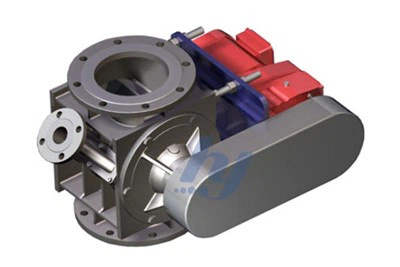
Rotary Airlock Valve for Granular Material If you are interested in learning more about our slide gate valves or discussing a specific application, we would be more than happy to engage in a procurement discussion. Please reach out to us to explore how our products can meet your requirements and contribute to a more efficient and quieter operation. Your inquiries are always welcome, and we look forward to a successful partnership.
References
- ASME B16.40 – Standard for Slide Gate Valves for Class 125 and Class 250 Cast Iron and Ductile Iron Slide Gate Valves
- ISO 15549 – Acoustics – Determination of Occupational Noise Exposure and Estimation of Noise – Induced Hearing Impairment
Shanghai Hanye Engineering Technology Co., Ltd.
As one of the most experienced slide gate valve manufacturers and suppliers in China, we offer a wide range of products with superior quality. We warmly welcome you to buy customized slide gate valve at competitive price from our factory. For more information, contact us now.
Address: Building 7, No. 428 Banqiao East Road, Shanyang Town, Jinshan District, Shanghai
E-mail: Windy@hanye-tech.com
WebSite: https://www.hanyeconveying.com/
