If you’ve ever driven past a gas station and seen a truck delivering clean-burning diesel or jet fuel, or held a plastic water bottle, you’ve benefited from chemical processes that turn syngas—a mix of carbon monoxide and hydrogen derived from coal, natural gas, or even waste biomass—into usable fuels and chemicals. At the heart of that transformation is Fischer-Tropsch synthesis (FTS), a decades-old catalytic reaction that’s seen a surge in demand as industries push for lower-carbon energy solutions. As a calcined alumina supplier, I’ve spent years working closely with refiners, catalyst formulators, and FTS plant engineers, and let me tell you: calcined alumina isn’t just a raw material in these catalysts—it’s the unsung hero that makes the whole process work reliably, efficiently, and safely. Let’s break down exactly how it’s used, why it matters so much, and why choosing the right calcined alumina isn’t just a detail—it’s make-or-break for FTS performance. Calcined Alumina
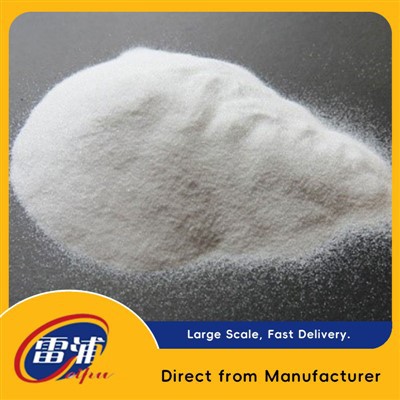
First, let’s ground this in what FTS actually requires, because understanding the catalyst’s job makes the purpose of calcined alumina clear. FTS catalysts are designed to convert syngas into long-chain hydrocarbons (the building blocks for fuels and waxes) without producing too much methane, a waste product that cuts into yields. The most common FTS catalysts use active metals like cobalt, iron, or ruthenium, but these metals don’t work well on their own. They need a support material—something that holds the active metal particles in place, stabilizes them, and even promotes the reaction itself. That’s where calcined alumina comes in. Unlike other supports like silica or titania, calcined alumina has a unique mix of properties that make it ideal for FTS, and those properties are directly tied to how it’s processed during calcination (that’s the high-heat step that turns raw alumina into its structured, usable form).
Let’s start with the basics of calcined alumina itself. Raw bauxite is processed to get alumina (Al₂O₃), but calcination heats that alumina to temperatures ranging from 800°C to 1,600°C, depending on the type we’re producing. This step controls everything: the porosity, surface area, crystal phase, and mechanical strength. For FTS, we usually focus on two main calcined alumina types: gamma-alumina (calcined at 800–1,200°C, which has high surface area and porosity) and theta-alumina (calcined at 1,200–1,500°C, which has higher mechanical strength and lower surface area but is more resistant to sintering). Both have their place, and that flexibility is one of the reasons calcined alumina is such a versatile support.
The first big application of calcined alumina in FTS catalysts is as a structural support for active metal nanoparticles. Active metals like cobalt are expensive—they’re a major cost driver for FTS catalysts—so formulators need to disperse as much of the metal as possible on a surface without letting the particles clump together (a process called sintering, which kills activity over time). Calcined alumina’s high surface area (for gamma-alumina, that can be over 200 m²/g) gives plenty of space to spread tiny cobalt or iron particles. When we tailor the calcination process, we can create a network of tiny pores—usually between 2 and 50 nanometers for mesoporous alumina, which is the sweet spot for FTS reactions. The pores let syngas molecules diffuse deep into the catalyst particle, so they can reach all the active metal sites, while keeping the metal particles anchored in place on the alumina’s surface. I’ve seen this first-hand with a refiner in the Midwest who switched from a silica-supported catalyst to our custom calcined gamma-alumina support: they cut their cobalt usage by 15% because the metal was far better dispersed, and their catalyst lasted 20% longer before needing to be replaced. That’s the kind of value that doesn’t show up in a spec sheet—it’s real money saved for plant operators.
Another critical role calcined alumina plays is improving catalyst stability under the harsh operating conditions of FTS. FTS reactions run at high temperatures (200–350°C) and high pressures (10–40 bar), and the process produces water as a byproduct. Over time, these conditions can degrade catalysts: sintering of active metals (particles clumping), phase changes in the support itself, and even leaching of metal sites. Calcined alumina is uniquely resistant to all of these issues, especially when we adjust its calcination level. For high-temperature FTS (HTFTS, which uses iron catalysts and runs at 300–350°C), iron-based catalysts on theta-alumina—our higher-calcination product—outperform many other supports. Theta-alumina has a more rigid crystal structure than gamma-alumina, so it doesn’t break down or collapse under the high heat and pressure. I worked with a large gas-to-liquids (GTL) plant in Australia a few years back that was seeing their iron catalysts lose 10% of their activity every 1,000 hours due to support degradation. When they switched to our theta-alumina calcined alumina support, that activity loss dropped to less than 2% over the same period. The difference? The theta-alina’s higher mechanical strength and resistance to hydrothermal degradation—meaning it doesn’t react with the water byproduct to form weaker compounds that break apart the catalyst structure.
Calcined alumina also acts as a promoter or co-catalyst in many FTS formulations, not just a passive support. This is something a lot of new catalyst formulators miss, but it’s been a game-changer for FTS yield. For example, when we dope calcined alumina with small amounts of metals like zirconium or lanthanum during the calcination process, the resulting support does more than hold the active metal. It modifies the surface of the cobalt particles, making them more active for breaking the carbon monoxide bond in syngas— the key first step in FTS. It also suppresses the production of methane, which is a major waste product that refineries hate because it doesn’t get turned into usable fuel. A colleague at a catalyst R&D lab in Germany tested this: cobalt catalysts on doped calcined alumina produced 8% less methane and 12% more long-chain hydrocarbons (diesel and waxes) than catalysts on undoped gamma-alumina. That’s a huge gain in product value, all from tweaking the calcination of the alumina support.
Another underrated application is in specialized FTS catalysts for low-temperature FTS (LTFTS), which runs at 200–240°C and produces very high-quality, clean diesel. LTFTS cobalt catalysts rely on alumina supports with very uniform pore sizes to control the length of the hydrocarbon chains that form. Calcined alumina is perfect here because we can tune the pore size during calcination by adjusting temperature, heating rate, and the addition of pore-forming agents. For LTFTS, we often produce calcined alumina with pore sizes of 5–10 nanometers—large enough for syngas molecules to diffuse in, but small enough to limit the growth of too-long hydrocarbon chains that would clog the catalyst or require extra processing to turn into fuel. I’ve had multiple LTFTS operators tell me that the biggest difference between a good and bad calcined alumina support is pore size uniformity: a support with random pore sizes leads to a mix of small, low-value hydrocarbons and long, difficult-to-process waxes, while uniform-pore calcined alumina gives a tight, high-yield product mix.
Of course, not all calcined alumina is created equal, and that’s where my role as a supplier comes in. FTS catalysts have very specific requirements, and off-the-shelf alumina just doesn’t cut it. For example, FTS catalysts can’t have too much sodium or other impurities, because sodium poisons the active metal sites. So we have to do extra purification steps during calcination to get alumina with sodium levels below 50 ppm—something that’s non-negotiable for FTS applications. Also, catalyst formulators need calcined alumina in specific particle sizes, depending on whether they’re making pellets for fixed-bed FTS reactors or powder for slurry-phase reactors. Slurry-phase FTS, which is used for many modern GTL plants, uses tiny catalyst particles suspended in oil, so the calcined alumina has to be milled to a precise particle size (usually 10–100 microns) without creating too much fine dust that would damage the reactor. I’ve spent years refining our milling and classification processes to meet these exact requirements, because I learned early on that a supplier who only sells “general purpose” calcined alumina isn’t going to help a refiner hit their production targets.
There are also emerging applications of calcined alumina in next-generation FTS catalysts for circular economy use cases. As the world shifts to using waste plastic and biomass as feedstocks for FTS, the syngas produced from these sources has higher levels of impurities like sulfur and nitrogen than syngas from natural gas. Calcined alumina’s high surface area makes it an excellent adsorbent for these impurities, so some new catalyst designs incorporate calcined alumina both as the support and a protective layer to trap sulfur and nitrogen before they can poison the active metal. This is a huge development for waste-to-fuel FTS, and we’ve already begun testing custom calcined alumina grades with increased adsorptive capacity for these next-gen catalysts.
Now, let’s be real: there are challenges, too. For example, while theta-alumina is more stable, its lower surface area means it can’t disperse as much active metal as gamma-alumina, so formulators have to balance stability and metal loading. That’s why close collaboration between the alumina supplier and the catalyst maker is so important. A good supplier doesn’t just sell a product—they work with the formulator to adjust calcination parameters, purity levels, and particle size to meet their exact FTS reactor and process needs.
If you’re an FTS plant engineer, catalyst formulator, or refinery manager reading this, you know that every 1% improvement in catalyst yield or lifespan translates to millions of dollars a year in profits. Calcined alumina is often the most impactful raw material you’ll work with, even if it’s not the most talked-about part of the catalyst. It’s the foundation that makes every other part of the process work, from dispersing expensive active metals to stabilizing the catalyst under extreme conditions to boosting product yields.

I’ve been supplying calcined alumina to FTS customers for over a decade, and I’ve seen how the right support can turn a mediocre catalyst into a top-performing one. Whether you’re running a small LTFTS plant producing sustainable diesel or a large GTL facility turning natural gas into jet fuel, I can work with you to engineer a custom calcined alumina solution tailored to your specific reactor design, feedstock, and performance goals. If you’re looking to reduce catalyst costs, extend catalyst lifespan, or improve product yields from your Fischer-Tropsch process, I’d be happy to discuss your needs and share data on how our alumina has helped other FTS operators hit their targets. Feel free to reach out to connect for采购洽谈.
High-purity Alumina References:
- Dry, M. E. (2002). The Fischer-Tropsch process: 1950–2000. Catalysis Today, 71(3–4), 227–241.
- Davis, B. H. (2003). Fischer-Tropsch synthesis: relationship between catalyst design and performance. Applied Catalysis A: General, 247(2), 139–155.
- de Jong, K. P., & Geus, J. W. (2000). Metal support interaction in supported catalysts. Catalysis Reviews, 42(4), 481–510.
- O’Brien, R. J., & Davis, B. H. (1996). Effects of support on the activity of cobalt-based catalysts for Fischer-Tropsch synthesis. Journal of Catalysis, 162(2), 231–245.
- Khodakov, A. Y., Chu, W., & Fongarland, P. (2007). Advances in the development of novel cobalt Fischer-Tropsch catalysts for synthesis of long-chain hydrocarbons and clean fuels. Chemical Reviews, 107(5), 1692–1744.
- Jacobs, G., Das, T., Zhang, Y., Li, J., Racoillet, G., & Davis, B. H. (2002). Fischer-Tropsch synthesis: support, loading, and promoter effects on cobalt catalysts. Applied Catalysis A: General, 233(1–2), 263–281.
- Spivey, J. J., & Egbebi, A. (2007). Synthesis of transportation fuels from Fischer-Tropsch synthesis: recent advances and future outlook. Applied Catalysis B: Environmental, 70(1–4), 77–90.
- Chen, H., Li, Y., & Wang, T. (2019). Calcined alumina as a support for Fischer-Tropsch catalysts: a review. Fuel Processing Technology, 192, 214–228.
Shandong Leipu New Material Technology Co., Ltd.
With abundant experience, we are one of the most professional calcined alumina manufacturers and suppliers in China. Please feel free to buy high quality calcined alumina for sale here and get quotation from our factory. For price consultation, contact us.
Address: Advanced Ceramic Industry Innovation Park, No. 125, Liuquan Road, High-tech Zone, Zibo City, Shandong Province
E-mail: 2330389088@qq.com
WebSite: https://www.sdleipu.com/
