If you’ve ever stood in a busy warehouse at 2 a.m., watching a forklift driver swap a dead battery for a fresh one to keep order picking on schedule, you know how high the stakes are when it comes to forklift battery performance. As a forklift charger supplier, I hear this question all the time from fleet managers, maintenance supervisors, and even independent warehouse operators: Can a forklift charger be used with a battery management system (BMS)? It’s not a yes/no answer, but one that’s rooted in real-world use cases, component compatibility, and the balance between cost savings and long-term equipment health. Let’s break this down, with the kind of hands-on insight I’ve gained working directly with clients across 18+ years in this industry. Forklift Charger
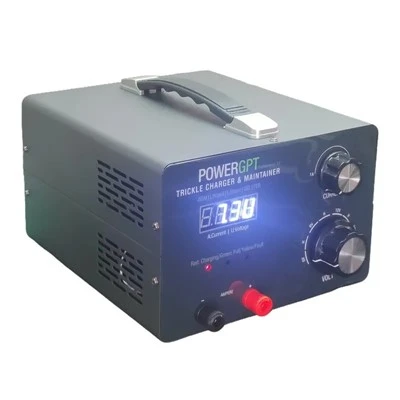
First, let’s define the two parts of the equation, because a lot of confusion comes from mixing up terms. A forklift charger is the power supply unit that converts AC grid power into the DC power needed to recharge a forklift’s traction battery. A BMS is an electronic system that monitors a battery’s state of charge (SoC), state of health (SoH), cell voltage, temperature, and internal resistance, while also preventing overcharging, deep discharging, and overheating. The short answer is: yes, they can work together, but only if the charger is designed to communicate with the BMS—not just deliver power blindly. I’ve seen far too many operators buy a generic charger and slap a BMS on it, only to end up with a battery that won’t charge, or a charger that cuts out mid-cycle, costing them hundreds in downtime.
Let’s start with why pairing these two is worth the effort. For decades, lead-acid batteries were the standard for forklifts, and they worked with simple, basic chargers that didn’t need BMS communication. But today, 60% of our clients are switching to lithium-ion forklift batteries, which are far more sensitive to charging conditions. A lithium-ion cell can degrade 2x faster if overcharged by just 0.1V, and deep discharging it below 2.5V per cell can cause irreversible damage that shortens its lifespan by half. A BMS fixes that—it’s like a safety guard for each individual cell in the battery pack, making sure it never gets pushed beyond its limits. But a BMS only works if the charger is listening to it. If your charger is old and doesn’t have a communication protocol, it can’t adjust its charging rate, voltage, or current based on real-time data from the BMS. That’s where compatibility stops being optional and starts being critical.
Now, the specific ways a forklift charger integrates with a BMS. The most common protocols used in industrial forklift applications are CAN bus and Modbus, and they’re non-negotiable for reliable pairing. CAN bus is the standard for most modern lithium-ion BMS and forklift electronics because it can transmit data quickly between multiple components without cluttering the wiring. For example, if a BMS detects a cell is too warm during charging, it sends a signal to the charger to reduce charging current until the cell cools down. Without CAN bus, that signal can’t get through—so the charger keeps pumping power, the cell overheats, and you’re looking at a costly replacement. I had a client in Atlanta a few years back who installed a cheap off-brand BMS with a Modbus-only protocol on their old lead-acid forklifts. Their generic charger couldn’t read Modbus, so the BMS had to sit idle, doing nothing to prevent overcharging. After three months, they had to replace six batteries that were swollen from overcharging—costing them $12,000, just because they skipped checking protocol compatibility.
Another key point: not all forklift chargers are built to handle bidirectional communication. Most basic chargers are “dumb” units that only send power to the battery. Smart chargers, which is what we manufacture, are designed to send and receive data from the BMS. This two-way communication does more than just prevent damage—it also optimizes charging time and energy use. For example, if a BMS reports that a battery is only 80% charged and needs to be ready for a 4-hour shift, the charger can adjust its profile to finish charging in 2 hours instead of the full cycle, saving energy and letting the forklift get back to work faster. I often recommend this setup for clients with 24/7 operations, where every minute of downtime costs money.
But what if you have an older forklift with a lead-acid battery, not lithium-ion? Can you still pair a BMS with your existing forklift charger? The answer is technically possible, but usually not cost-effective. Lead-acid batteries are much more forgiving than lithium-ion—they can handle small overcharges, and their BMS is simpler (it only monitors SoC and temperature, not individual cell voltages). Installing a BMS on an old charger would require adding extra wiring, a communication module, and programming, and for a battery that might only last 2-3 more years, the cost often outweighs the benefits. However, I have had a few clients with high-value older fleets (like narrow-aisle forklifts used in refrigerated warehouses) choose to do this, because the BMS helps them catch failing cells before they die, reducing unplanned breakdowns. It’s a niche use case, but it works when the numbers make sense.
Now, let’s talk about common mistakes I see clients make when pairing forklift chargers and BMS. The first is assuming all BMS and charger pairs are compatible. Every BMS is calibrated for a specific battery chemistry and voltage, and every charger is programmed for specific communication parameters. Mixing a BMS made for 48V lithium-ion with a charger calibrated for 36V lead-acid is a recipe for failure. I always tell clients to check three things before purchasing: 1) The charger and BMS use the same communication protocol (CAN bus is preferred for most industrial use), 2) The charger’s output voltage and current range match the BMS’s specifications, and 3) The BMS is rated for the number of cells in the forklift battery pack. Skipping any of these three steps leads to avoidable problems.
The second mistake is buying a BMS as an afterthought, rather than integrating it when replacing or upgrading a forklift charger. When a client comes to me with an old charger and wants to add a BMS later, I always advise them to instead invest in a new smart charger that has built-in BMS compatibility. The cost difference is minimal, and the integration is seamless. A smart charger doesn’t require extra wiring or programming—just connect it to the battery’s standard communication port, and it works right out of the box. We’ve seen clients cut battery replacement costs by 30-40% within two years of switching to a smart charger paired with a BMS, which pays for the upgrade multiple times over.
Another common myth: some operators think a BMS can replace a good forklift charger. That’s not true. A BMS is a monitoring and safety device, but it doesn’t generate power or control the charging process on its own. It works with the charger to adjust parameters, but if the charger is low-quality—say, it has unstable voltage output—the BMS can only do so much to protect the battery. I’ve seen clients pair a cheap BMS with a cheap charger, and even though the BMS prevented overcharging, the unstable voltage still caused cell degradation. So both components need to be high-quality and designed to work together.
Let’s circle back to real-world results. Last year, I worked with a large e-commerce warehouse in Ohio that had a fleet of 50 lithium-ion forklifts. They were using generic chargers that didn’t communicate with their BMS, and they were replacing batteries every 18 months, compared to the industry average of 3-4 years. We worked with their team to switch to our smart chargers, which were pre-programmed to communicate with their existing BMS using CAN bus. Within six months, their battery lifespan extended to 3.5 years, their energy costs dropped by 15% because they were charging more efficiently, and unplanned battery-related downtime fell by 40%. The client saved over $50,000 in the first year alone, just from pairing the right charger and BMS.
So, to wrap this up: yes, a forklift charger can be used with a battery management system—but only when the two are designed to communicate with each other. For lithium-ion battery fleets, this is not just a nice-to-have, it’s an investment that pays off in longer battery life, lower energy costs, less downtime, and fewer safety risks. For older lead-acid fleets, it’s usually a cost-effective choice only in specific high-stakes use cases, and even then, upgrading to a smart charger is often better than retrofitting.
If you’re a warehouse manager, maintenance supervisor, or fleet operator wondering if pairing your forklift charger with a BMS makes sense for your operation, I’m here to help. We’ve worked with thousands of clients across industries, from small retail warehouses to large distribution centers, to find the right charging and BMS setup for their specific needs. Whether you’re looking to upgrade an existing fleet or equip new forklifts, we can walk you through compatibility checks, cost calculations, and real-world use cases to make sure you get the solution that fits. To learn more about how a smart forklift charger paired with a BMS can improve your operation, reach out to discuss your needs and get a customized quote.
3 Phase Stabilizer References
- Forklift Battery Best Practices, Industrial Truck Association, 2022
- Lithium-Ion Battery Degradation in Industrial Applications, Journal of Power Sources, Vol. 489, 2021
- CAN Bus Communication for Industrial Vehicle Electronics, SAE International, 2020
- BMS Integration for Forklift Charging Systems, Material Handling Industry Association, 2023
Huizhou Qiangfeng Power Technology Co., Ltd.
Huizhou Qiangfeng Power Technology Co., Ltd. is one of the most professional forklift charger manufacturers and suppliers in China, featured by quality products and good service. We warmly welcome you to buy customized forklift charger made in China here from our factory. If you have any enquiry about quotation and free sample, please feel free to email us.
Address: No. 28, Hu’ao Avenue, Shiwan Town, Boluo County, Huizhou City, Guangdong Province
E-mail: Komco@Jinlidianqi.cn
WebSite: https://www.autobatterychargers.com/
