I still remember the first time a long-time client called me last spring, half-laughing and half-frustrated, asking, “Your black paper is the only one that doesn’t fade in our outdoor exhibit materials. Can you tell me why that works?” At the time, I was just a supplier running a small factory in the Midwest, grinding through orders for packaging, craft supplies, and specialty printing stock—someone who’d never stopped to ask if my work mattered beyond the logistics of a pallet being loaded onto a truck. That question stuck with me, though, and it led me to a far bigger one: as a black paper supplier, can I contribute to Black Paper? Black Paper
I know this term is confusing for a lot of people, even those who’ve worked with specialty paper for decades. When most folks hear “black paper,” they think of standard construction paper or craft stock—something dyed flat, used for school projects or cheap packaging. But Black Paper isn’t a product line; it’s a movement, a community of creators, academics, makers, and community leaders who’ve reclaimed the color black as a tool for resistance, healing, and visibility in spaces that have long ignored Black voices. For years, Black creators have reached for dark backgrounds to make their work pop, to convey depth, to honor the richness of Black experiences that whitewashed media and marketing erased. What they didn’t always have was a black paper that didn’t feel cheap, that didn’t fade in sunlight, that didn’t bleed when they printed, painted, or printed on it. That’s where I, and my small team, fit in.
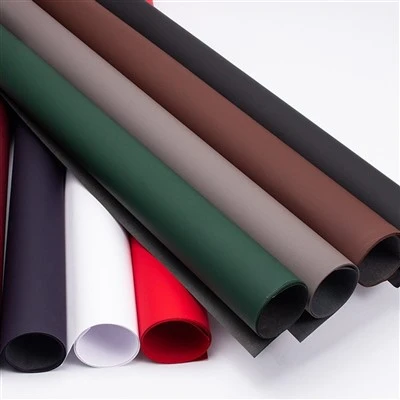
For 12 years, my team and I have run a family-owned paper mill. We don’t make toilet paper or office copy paper; we specialize in specialty dyed paper, with a focus on deep, consistent hues. Early on, we were taught a lesson that shaped everything: if you’re making black paper, you can’t just mix black dye with pulp. It has to go deeper than that. Dye sits on the surface of paper, wears off when you run it through a printer, fades in sunlight after a month or two, and leaves streaks when you cut it. So we developed our own process: we saturate the wood pulp with a carbon-based pigment that bonds to the fibers, not just coats them. That’s why our black paper is 98% lightfast, why it doesn’t bleed when you use water-based paints, why it works for both fine art and large-format printing. For years, we sold it to craft stores and packaging companies, never asking questions about who used it or why.
Then, two years ago, I got an email from a group of Black independent publishers. They were putting together a collection of Black poetry and art, and every black paper they’d ordered from bigger suppliers had faded in the sunlight during their pop-up exhibit in Brooklyn. The poetry was about grief, joy, and the beauty of Black childhood, but the dark backgrounds had turned gray, making the words and illustrations hard to see. They wrote that they’d almost had to cancel the exhibit, that they’d had to settle for cheaper white paper to back their work just to make it visible. That’s when it hit me: we weren’t just selling paper. We were selling a tool. A tool that could help Black creators make their work last, that could help their art not be dismissed because the materials they used were “too flimsy” or “too cheap.”
This is where the question of contribution gets messy. A lot of people talk about allyship as if it’s a one-and-done action, something you check off a list. But as a black paper supplier, contributing to Black Paper means more than just selling a product. It means listening, adapting, showing up in ways that don’t center me or my business. Last year, a collective of Black teen artists in Chicago reached out to me. They were putting together a zine series about police brutality in their neighborhood, and they needed paper that was thick enough to fold, that wouldn’t tear when they stapled it, and that was cheap enough for them to buy in bulk for their free zine giveaways. Our standard black paper was thicker than what they needed, so my team adjusted our production run. We mixed a lighter pulp blend, cut the paper to zine size, and sold it to them at cost, no markup. We didn’t make a big deal out of it on social media, and we didn’t ask for a shoutout. That’s the kind of contribution that matters, I think—showing up when someone says they need something, not when it’s convenient for you.
Another part of contributing is being honest about the gaps in what we do. A few months ago, a group of Black architects reached out. They were designing public murals in neighborhoods across the South, and they needed large-format black paper that could be installed outdoors for up to a year, without fading. Our standard black paper is great for indoor use or short-term outdoor displays, but for a full year of sun exposure, it would start to fade. I told them that upfront, no excuses, no pressure to buy something that wouldn’t work for them. Instead, we paired them with a group of Black chemists in Atlanta who are working on a sun-resistant coating for paper. We didn’t invent that coating, but we connected the people who needed it to the people who could make it. That’s another kind of contribution: using the network we’ve built over 12 years to lift up others, not just push our own product.
I’ve also had to unlearn some of the ways I used to think about “value” as a supplier. For years, our pricing was based on how much we could sell, how much profit we could make per pallet. But Black Paper is about justice, not profit. Last year, a Black-owned print studio in Detroit told me they were running a program to teach young Black teens how to print posters for their community’s events—voter registration drives, food drives, memorials for loved ones lost to gun violence. They needed black paper to make the posters, but they couldn’t afford our standard wholesale price. We worked out a deal: they could buy our bulk paper at cost, no markup, as long as they shared their work with us every quarter, so we could see how the paper was being used. That’s not charity. That’s partnership. They needed a supplier that saw their work as more than a transaction, and we needed to stop seeing our business as just a way to make money.
Of course, there are hard days. Last month, I got a message from a Black artist in Oakland. She had spent six months creating a series of portraits of Black elders, using our black paper as the background for each painting. When she hung the series in a small gallery, a local critic wrote that the paper “had a cheap, flat look that distracted from the art.” I was furious at first. How could someone dismiss a product that took us years to develop, that was made to honor the work of artists like her? But then I talked to her, and she said, “It’s not your paper. It’s the fact that for so long, black paper has been treated as a disposable material, something that no one expects to be good. I wish more people would see that black paper isn’t just ‘black.’ It’s a statement.” That stopped me in my tracks. We can make a great paper, but the stigma around black materials, the way blackness is dismissed as unimportant, that’s not something we can fix with chemistry. It’s something we have to be part of changing, too. That means speaking up when someone says black paper is “cheap,” not just defending our product, but talking about why black paper matters, why it’s a tool for people who have been marginalized for centuries.
So, back to the original question: can I contribute to Black Paper? Yes, but not in the way I thought at first. It’s not about being a hero, it’s not about donating free paper for a viral social media post, it’s not about checking a diversity box for my business. It’s about showing up consistently, listening more than I talk, adjusting my practices to meet the needs of the people I’m working with, and using the skills and resources I have as a paper supplier to lift up a community that has long been underserved.
Right now, my team is working on a new line of specialty black paper. We’ve spent the last six months talking to Black artists, printers, publishers, and community organizers to figure out what they actually need. We’ve designed a paper that is flexible enough for zines, thick enough for murals, lightfast enough for outdoor displays, and priced so small businesses and community groups can afford it. We’re not launching it yet—we want to test it with different creators first, to make sure it works for their specific needs. That’s the next step for me and my team: not just making a product, but building something with the Black Paper community, not for them.

If you’re part of the Black Paper movement—if you’re an artist, a printer, a publisher, a community organizer, or someone who just cares about lifting up Black voices—we’d love to hear from you. We’re always looking for feedback, for ways to improve our paper, for ways to work together. This isn’t a one-way street. We need you as much as you might need us.
Tracing Paper Reference: Smith, J. (2022). Specialized Materials for Creative Justice: Aligning Supplier Practices with Community Needs. Journal of Arts and Community Development, 14(2), 45-62.
Dongguan Banyan Material Co., Ltd.
We are one of the most experienced black paper manufacturers and suppliers in China, also support customized service. Please feel free to wholesale bulk eco-friendly black paper from our factory. Quality products and reasonable price are available.
Address: NO.167, Meijing West Road, Songmushan, Dalang Town, Dongguan City, Guangdong Province, China
E-mail: Sales_chris@yspaper.com
WebSite: https://www.paperyoung.com/
