If you’ve ever worked with electrical wiring—whether as a professional electrician, a DIY homeowner tackling a reno, or someone helping a friend fix a faulty light—you’ve probably stared at a length of sheathed wire and wondered: Can I splice this? It’s a question I get at least once a week here, and as a sheathed wire supplier who’s spent 12 years matching the right wire to projects (from small bathroom remodels to large commercial build-outs), I can tell you this isn’t a “yes or no” answer. It depends on what kind of sheathed wire you’re working with, why you’re splicing it, and how you do it. Let’s break this down without all the jargon, since I know most folks asking aren’t just here for a textbook answer—they’re here to do the job right, stay safe, and not end up with a wiring fire on their hands. Sheathed Wire

First, let’s make sure we’re all on the same page about what “sheathed wire” means, because that’s where a lot of confusion starts. When I first got in this business, I thought all sheathed wire was the same, until a newbie electrician came in asking to splice a pair of wires for a backyard pergola, and she pulled out type UF (underground feeder) sheathed wire, not the standard NM (non-metallic) sheathed wire we sell most of. NM sheathed wire is the stuff you see inside walls, in attics, or on the outside of homes where it’s protected—its sheath is a flexible, plastic-like jacket (usually PVC) that covers individual insulated conductors, plus a bare copper ground wire. UF sheathed wire has a thicker, more durable polyethylene sheath, and it’s used for direct burial, like outdoor lights or sprinkler system wiring. That’s a huge difference, because splicing UF isn’t the same as splicing NM, and jumping into either without knowing the rules is how mistakes happen.
Let’s start with the most common type most people ask about: NM sheathed wire. Can you splice that? The short answer is yes, but only in specific, approved locations. The National Electrical Code (NEC)—the rulebook every electrician follows in the U.S.—says you can’t splice NM sheathed wire inside walls, floors, or ceilings unless you have access to that splice later. That means a splice inside a stud bay that’s covered by drywall? That’s a hard no. You have to put splices in accessible areas: junction boxes, attic access panels, basement ceiling spaces where you can open it up later, or even under a kitchen sink (as long as it’s not near water lines, obviously). Why the rule? Because sheathed wire’s outer jacket is there to protect the individual wires from damage, moisture, and abrasion. When you splice it, you strip that jacket back, and those bare splice points are at risk of getting nicked by nails, touched by water, or exposed to dust that can cause corrosion—unless they’re inside a sealed junction box.
A lot of DIYers I talk to want to splice NM because they’re trying to extend a wire run for a new outlet or light, and they don’t want to tear open walls to pull new wire. I get that—tearing out drywall is a pain. But here’s the thing: if you do splice NM in an inaccessible space, you’re not just risking a fire from a loose connection—you’re also voiding any home insurance, because most policies won’t cover damage from unpermitted, non-code-compliant wiring. Last year, we had a customer come in who tried to splice NM wire inside their ceiling, and a year later, a loose splice overheated and burned a 2-foot hole in their attic insulation. Their insurance refused to pay for repairs because the wiring wasn’t up to code, and they had to pay $15,000 out of pocket. That’s the kind of story that makes me stop and explain the “why” behind the rules, not just the “do this.”
Now, what about the tools and method for splicing sheathed wire? Even if you’re doing it right, the wrong technique will mess up the job. For NM sheathed wire, you need a few specific tools: a wire stripper that’s sized for the gauge of wire you’re using (most residential is 14 or 12 gauge, so a stripper marked for those sizes works), a junction box rated for the voltage and amperage of your circuit, wire nuts that match the gauge of wire, and electrical tape for extra protection (though wire nuts are the primary connection, tape is a good backup for long-term durability). The key steps here: first, turn off the circuit at the breaker—this is non-negotiable, always test with a non-contact voltage tester before touching any wires. Next, strip the outer sheathing from the NM wire about 6 to 8 inches back, being careful not to nick the individual insulated conductors inside. Then, strip about ¾ of an inch of insulation from each conductor you’re splicing, twist the matching conductors together (black to black, white to white, bare ground to bare ground), and twist on a properly sized wire nut. Push the splice neatly into the junction box, secure the box to a stud or joist, and close it up. That’s the approved way to splice NM, and it’s the method I teach every new apprentice that comes through our warehouse.
Now, what about that UF sheathed wire I mentioned earlier? This is where the answer gets trickier, because a lot of people think “it’s sheathed, so I can splice it anywhere”—but that’s not true. UF sheathed wire is designed to be buried directly in the ground, so its outer sheath is thick enough to resist moisture and soil chemicals. But the NEC has specific rules for splicing UF, too. You can’t splice UF sheathed wire outdoors or in the ground unless you’re using a junction box that’s rated for direct burial. A regular indoor junction box won’t work here, because it isn’t waterproof, and water will get in and corrode the splice. Even if you’re running UF between two outdoor lights, you have to stop at each light fixture’s approved junction box, not splice the UF wire itself in the ground. We had a landscaper come to us last spring who tried to splice UF wire under a patio, and a heavy rain flooded the splice, causing the circuit breaker to trip every time it rained. He had to dig up 10 feet of patio stone to fix it, and he told us he’d saved $20 on a waterproof junction box by trying to splice in the ground—total waste of time and money.
There are also a few types of sheathed wire you should never splice, no matter what. The first is armored sheathed wire (AC), also called BX. Wait, hold on—some people ask about AC, which has a metal armor jacket, and that’s a whole different ballgame. Most of the same rules apply: you can splice AC inside a junction box, but you have to be careful when stripping the armor not to nick the insulation, because the metal armor is a ground conductor too. But the type you should never splice is any sheathed wire that’s part of a pre-wired assembly—like the sheathed wire that comes with a ceiling fan, a fridge, or a pre-made light fixture. Those wires are factory-spliced and tested, and cutting or splicing them can void the manufacturer’s warranty, plus you don’t know the gauge or rating of the internal wires if you tamper with them. I always tell customers: if it’s a pre-assembled wire with a plug or fixture on the end, replace it entirely, don’t splice.
Another common question I get: can I splice two different types of sheathed wire together? Like, can I splice NM sheathed wire inside my wall to UF sheathed wire running to an outdoor light? The answer is yes, but only in a junction box, and you have to use wire connectors rated for both the gauge and type of conductor. Also, make sure the amperage rating of the two wires matches—you don’t want to splice a 14-gauge NM wire (which is rated for 15 amps) to a 12-gauge UF wire (rated for 20 amps), because that can overload the smaller wire. It’s a simple check, but it’s one that even experienced electricians miss sometimes.
I know a lot of people reading this are DIYers, and I don’t want to talk down to anyone—DIY is how a lot of us learn, and I’ve worked with some amazing DIYers who do great work. But here’s the thing: when it comes to electrical wiring, cutting corners to save time or money almost always comes back to bite you. I’ve seen too many people try to splice sheathed wire in a wall, call a professional a year later when it starts sparking, and end up paying way more than they would have if they’d done it right the first time. That’s why we always try to give our customers the straight story, not the shortcut. If you’re unsure about a splice, it’s better to call a licensed electrician than to take a risk.
As a sheathed wire supplier, part of my job isn’t just to sell you wire—it’s to make sure you use it safely and correctly. We get all kinds of requests: some for bulk spools of NM for new construction, some for small lengths of UF for a backyard project, some for replacement wire for old homes. Every time someone asks about splicing, I take a minute to walk them through the rules, give them the right tools and wire, and even recommend a local electrician if they’re not comfortable doing it themselves. That’s how we build trust with our customers, not just by selling them a product.
Let me wrap this up with a few key takeaways that I always leave with people when they ask me about splicing sheathed wire. First: know what type of sheathed wire you’re working with. NM, UF, AC—each has different rules. Second: splices must only be in approved, accessible locations. No hiding splices in walls, floors, or the ground unless they’re in a waterproof junction box. Third: always turn off the circuit and test for power before doing any work. Fourth: never splice pre-assembled sheathed wire that comes with a fixture or plug. Fifth: if you’re unsure, ask a pro.
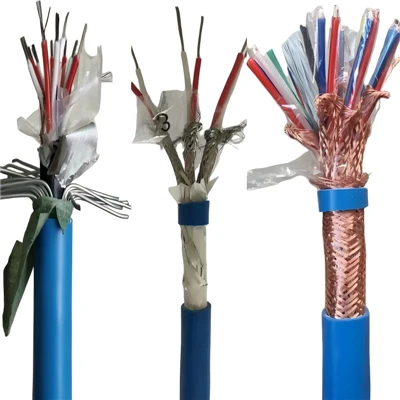
At the end of the day, the question “Can I splice sheathed wire?” doesn’t have a yes or no answer—it has a “yes, if you do it right” answer. The good news is, if you follow the NEC rules, use the right tools, and take your time, splicing sheathed wire is a safe, cost-effective way to extend or repair your wiring. If you’re working on a project and need the right sheathed wire, or have more questions about splicing, don’t hesitate to reach out to our team to discuss your specific needs. We’re here to help you get the job done right, safely, and up to code.
Aluminum Cable References: National Electrical Code (NEC) 2020 Edition; Electrical Safety Foundation International (ESFI) Residential Wiring Guidelines; Underwriters Laboratories (UL) Standard for Sheathed Cable Assemblies.
Anhui Huawang Cable Co., Ltd.
As one of the most professional sheathed wire manufacturers and suppliers in China, we also support customized service. If you’re going to buy discount sheathed wire, welcome to get pricelist from our factory. Quality products and reasonable price are available.
Address: No.32, East Street, Batian Street, Datong Town, Tianchang City, Anhui Province
E-mail: Linda@huawangcable.com
WebSite: https://www.huawang-cable.com/
