If you’ve ever stood at the base of a wind turbine farm on a crisp, windy ridge, squinting up at the massive structure soaring 300+ feet above you, you’ve likely wondered about the heavy steel or concrete tubes holding that turbine aloft. I’ve spent 12 years selling tubular towers—smooth, cylindrical vertical structures engineered for load distribution, durability, and adaptability—for projects across 17 countries, and I can tell you: they’re far more than just “tall pipes.” Every application is rooted in balancing technical needs with real-world constraints, whether that’s withstanding hurricane-force winds, supporting heavy industrial equipment, or replacing aging infrastructure. Let’s break down the core uses of tubular towers, how we tailor them for each job, and why they’re a workhorse no modern industry can afford to overlook. Tubular Tower
First, the most recognizable use: supporting utility-scale and small-scale wind turbines. For wind energy, tower height is non-negotiable—higher altitudes have faster, more consistent wind, which directly translates to more power output. A standard 2-megawatt (MW) wind turbine needs a tower strong enough to hold 50+ tons of rotor blades, a nacelle, and gearbox, all while withstanding extreme dynamic loads: wind gusts that can reach 120 mph, vibration from spinning blades, and even ice accumulation in cold climates. Tubular towers are ideal here because their tapered, seamless design distributes weight evenly across their entire structure, avoiding the stress points that plague segmented, lattice-style towers. Lattice towers are lighter, cheaper, but they’re more prone to bending under heavy loads and can create turbulence around the turbine’s base, reducing efficiency. Our tubular towers, for example, use 10 to 12 mm thick high-strength carbon steel for mid-latitude regions, while for offshore wind farms, we coat the steel in a marine-grade epoxy and add extra reinforcement to resist saltwater corrosion and wave impact. I’ve seen a 100-turbine project in the North Sea where switching from lattice to tubular towers increased annual energy output by 8%—a difference that translates to millions of dollars in revenue for the developer. Even small-scale community wind projects use our 80-foot tubular towers, which are lighter, easier to transport to rural sites with narrow access roads, and require less maintenance than alternative structures.
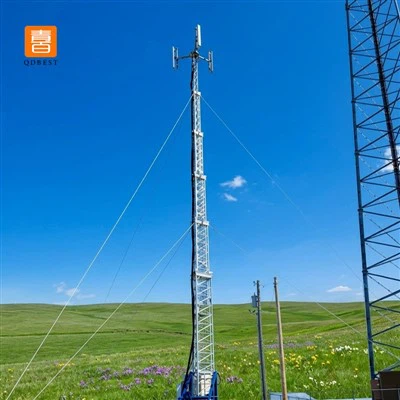
Next, telecommunications: 5G and broadcast transmission towers. If you’ve ever had a seamless video call on your phone in the middle of a suburban neighborhood or a rural highway, there’s a good chance a tubular tower in your area is responsible. Traditional telecom towers are often lattice or monopoles, but for 5G, the demand for taller, more discrete structures has exploded. 5G mmWave signals, the high-band frequencies that power fast internet, have a very short range—only a few hundred feet—so carriers need denser networks of small cells, often mounted on towers that blend into the environment. Tubular towers are perfect here because they can be customized in diameter and finish to match nearby buildings, trees, or even utility poles, avoiding the eyesore that comes with bulky lattice towers. We’ve built tubular telecom towers for a project in downtown Austin, Texas, where the city required structures that didn’t disrupt the historic skyline—our 150-foot smooth steel towers, painted to match the surrounding brick architecture, fit right in. For rural telecom, we also offer lightweight concrete tubular towers, which are cheaper to anchor in soft, sandy soil than steel towers, reducing installation costs by 15% in remote areas. Unlike telecom towers made of aluminum, tubular steel towers can support up to 20 small cell antennas, plus backup power systems, without sagging over time—a critical factor for carriers that need reliable service for tens of thousands of subscribers.
Then there’s industrial infrastructure: supporting heavy equipment for oil and gas, mining, and manufacturing. In oil and gas, tubular towers are used for flare stacks, production riser supports, and pump jack masts. Flare stacks, for example, need to vent excess gas safely, 50 to 200 feet above refinery or well sites, to prevent harmful emissions from pooling near workers. Our tubular flare towers are designed with pressure relief systems at the base to withstand the high heat of burning gas, and we add insulation to reduce heat transfer to nearby structures. For mining operations, tubular towers support conveyor belts that transport ore from deep pits to processing facilities—these towers need to be strong enough to hold the weight of 100+ foot long conveyor belts, which carry tons of ore per hour, as well as resist dust, moisture, and heavy vibration from mining equipment. I worked on a gold mine project in Western Australia where our tubular conveyor towers, made of weathering steel that forms a protective rust layer, required no repainting for 12 years, cutting maintenance costs by $200,000 over that period compared to traditional painted steel towers. Even manufacturing plants use tubular towers to lift overhead cranes, ventilator systems, and storage tanks—their uniform structure makes them easy to attach to, reducing installation time for new equipment.
Another underrated use: renewable energy storage and hydroelectric infrastructure. Pumped hydro storage, one of the most reliable grid-scale energy storage solutions, uses tubular towers to support penstocks—large pipes that carry water from upper reservoirs to lower ones, generating electricity when demand is high. These penstock towers need to be extremely strong, as water pressure can reach 1,000 psi, enough to burst a weak pipe. Our tubular penstock supports are engineered to distribute that pressure evenly, preventing leaks and structural failure. For solar farms in arid regions, tubular towers support tracking systems that follow the sun throughout the day, maximizing energy output. A standard 500-acre solar farm has hundreds of tracking units, each mounted on a tubular tower that can rotate 180 degrees to face the sun. Unlike wooden or concrete supports, our steel tubular towers resist termites, drought, and extreme temperature swings, which are common in desert climates like the Sahara or the Southwestern United States. We’ve supplied tubular tracking towers for a 200-MW solar project in Morocco, where temperatures reach 115 degrees Fahrenheit in the summer—our towers use low-thermal-expansion steel, which reduces rotation errors by 3% compared to standard steel, keeping the panels aligned and efficient.
I should also mention the less obvious, but no less important, use: lightning protection and environmental monitoring towers. Lightning strikes can cause millions of dollars in damage to industrial, power, and telecom infrastructure, so tubular towers are often designed as lightning rods, providing a safe path for electrical current to ground. Our tubular towers are equipped with lightning arresters at the top, and their conductive steel structure ensures the current flows down to the ground without damaging equipment. For environmental research, universities and government agencies use tubular monitoring towers to track wind speed, air quality, and greenhouse gas emissions. These towers are lightweight, easy to assemble in remote locations, and can hold weather sensors, air quality monitors, and even cameras. I worked with the University of Alaska to supply a 100-foot tubular monitoring tower in the Arctic, where temperatures drop to -40 degrees Fahrenheit in winter—our towers use special low-temperature steel that doesn’t become brittle in cold, and we add heated cables to prevent ice buildup on the sensors.
Now, you might be wondering: why choose a tubular tower over other structures for these uses? The answer comes down to three key advantages: structural integrity, transportability, and customizability. Unlike lattice towers, which have open frames that are prone to rust, insect damage, and wind load stress, tubular towers have a closed, seamless design that creates a uniform load path. That means they can support more weight and withstand harsher conditions than alternative structures. For remote projects, modular tubular towers—sections that can be transported in standard shipping containers, even to sites with limited access—are a game-changer. I’ve shipped 40-foot steel tubular tower sections to a wind farm in Nepal, where mountain roads are too narrow for large, pre-assembled structures; our modular design allowed local crews to assemble the towers on-site without heavy cranes, cutting installation time in half. Customizability is another big plus: we can adjust the diameter, height, material, and finish of our tubular towers to fit any project, whether that’s a 50-foot telecom tower for a small town or a 500-foot tower for an offshore wind farm.
Of course, every project has unique constraints, and that’s where our team comes in. We don’t just sell tubular towers—we work with developers, engineers, and contractors to design a structure that meets their specific needs, whether that’s reducing cost, complying with environmental regulations, or withstanding extreme weather. I’ve been in the industry long enough to know that a tower that works for a wind farm in Texas won’t work for a telecom tower in Norway, or a mining conveyor in Chile. That’s why we invest in material testing, load analysis, and on-site site assessments to make sure our towers perform as expected for decades.

If you’re working on a project that requires a reliable, durable, and adaptable vertical structure—whether it’s wind energy, telecom, industrial, renewable storage, or environmental monitoring—we’re here to help. We’ve supplied tubular towers for thousands of projects around the world, and we have the expertise to tailor a solution to your needs. To discuss your requirements, reach out to our team to coordinate a consultation and get a custom quote for your next project.
Telecommunication Tower References
- American Wind Energy Association (AWEA). (2022). “Tubular Steel Towers for Utility-Scale Wind Turbines.” Wind Energy Technical Report.
- International Telecommunication Union (ITU). (2021). “5G Small Cell Deployment: Tower Design and Discreteness Requirements.” Telecommunication Standardization Sector Report.
- Society of Petroleum Engineers (SPE). (2020). “Flare Stack Design for Harsh Industrial Environments.” SPE Drilling and Completion Journal.
- International Energy Agency (IEA). (2023). “Pumped Hydro Storage Infrastructure: Penstock Support Structures.” Grid Storage Technology Report.
- National Renewable Energy Laboratory (NREL). (2022). “Solar Tracker Mounting Systems for Arid Climates.” Solar Energy Engineering Report.
- International Standards Organization (ISO). (2019). “Tubular Steel Towers: Structural Load Requirements for Extreme Weather.” ISO 1461:2019.
Qingdao BEST Steel Structure Co., Ltd.
Qingdao BEST Steel Structure Co., Ltd. is one of the most professional tubular tower manufacturers and suppliers in China. We warmly welcome you to buy customized tubular tower made in China here from our factory. If you have any enquiry about OEM service, please feel free to email us.
Address: Jiaobei Industrial Park, Qingdao, China
E-mail: salesmanager@qdbsstower.com
WebSite: https://www.qdbsstower.com/
