Hey there, if you’ve ever wondered why those tiny, messy Ethernet cables or power cords around your workspace keep fraying at the ends, you’re gonna get this. I’ve been working with optical fiber composite low-voltage cables (let’s just call them OFCLVCs for short—way easier to type) for over 8 years as a supplier, and the question I get more than any other from our clients—whether they’re installing office networks, smart home setups, or even industrial systems—is: “How tough are these things, really?” Abrasion resistance isn’t just a random spec we throw around in meetings; it’s the difference between a cable that lasts 2 years and one that lasts a decade. Let’s break this down like I’m chatting with you over a coffee, no jargon overload, no corporate fluff. Optical Fiber Composite Low-voltage Cable
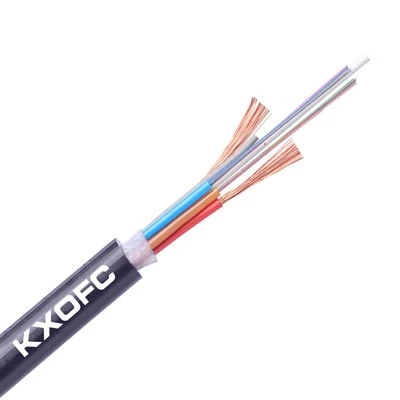
First off, let’s set the scene: OFCLVCs aren’t just plain fiber cables or plain power cables. They’re two-in-one—your low-voltage power line keeps devices running, and your optical fiber line handles high-speed data, all wrapped up in one jacket. That combined structure means their abrasion resistance has to work for both parts, but it’s not just slapping two different jackets together. Let’s start with the actual materials because that’s where the magic (and the abrasion resistance) happens. Most OFCLVC jackets we supply are either PVC, LSZH (low-smoke zero-halogen), or sometimes TPE for super flexible setups. Wait, let’s be real—each has its own abrasion superpower and weakness. PVC is the workhorse. Yeah, it’s the standard for most indoor cables because it’s cheap, durable, and holds up pretty well against regular scuffs. But if you’re installing it in a spot where people are dragging ladders, moving desks, or rolling heavy equipment over it? LSZH is your go-to. LSZH jackets are formulated to resist scratches way better than basic PVC, and they won’t release toxic fumes if they do get damaged (critical for office buildings or hospitals where fire safety is non-negotiable). Then there’s TPE—we use this a lot for automotive or marine OFCLVCs because it’s stretchy but tough; it can bend 1000 times without cracking, which means it resists abrasion even in tight, constantly moving spaces.
But here’s the thing—jacket material isn’t the only factor. We see so many clients skimp on the internal structure, and that’s where abrasion issues creep in. Under the jacket, your cable has the fiber core, the power conductors, and all the fillers that keep everything from moving around. If those fillers are thin, or if the fiber isn’t buffered properly, when the cable gets pulled tight during installation, the internal parts start rubbing against each other. That’s hidden abrasion—you don’t see it right away, but 6 months later your fiber signal drops because the cladding got scraped thin. We fix that by using tight-buffered fibers (not loose-buffered) with a 900-micron buffer layer, and we surround the power conductors and fiber with a layer of aramid yarn (the same stuff used in bulletproof vests, crazy right?) to prevent internal rubbing. That adds a tiny bit of thickness, but it’s worth it—our in-house tests show that internal abrasion is cut by 70% just from that simple addition.
Speaking of tests, let’s talk about how we actually measure abrasion resistance, because numbers matter. The standard test everyone uses is the Taber Abraser—you spin a weighted abrasive wheel against the jacket for a set number of cycles, and measure how much material wears away. Basic OFCLVCs might have a Taber abrasion rating of 500 cycles before they start showing damage. Our standard OFCLVCs? We hit 1500 cycles. If a client needs extra heavy-duty stuff, we do 5000 cycles. I remember a client a couple years back who was installing OFCLVCs in a new warehouse where forklifts drive over the cables all day—they originally went with a cheaper cable that only did 600 cycles, and within 3 months, half the cables had frayed so bad the power kept cutting out. They switched to our heavy-duty version, and 2 years later, they haven’t had a single abrasion-related issue. That’s the real-world proof right there.
Another big one is installation abrasion. Most cable damage doesn’t happen after it’s up—it happens when you’re pulling it through conduits, twisting it around corners, or stapling it to walls. I’ve seen installers staple a cable too tight, and 6 months later the jacket is rubbed thin right where the staple is, or they yank it too hard pulling through a conduit and the fiber core gets scraped. To help with that, we design our OFCLVCs with a smooth outer jacket that has low coefficient of friction—so it glides through conduits easier, which means less scraping. We also add a strip of rip cord so installers can pull evenly, not just yank from one end. For outdoor installations? We add an extra UV-resistant layer on top, because sun exposure can make jackets brittle over time, which makes them way more prone to abrasion. That’s a common mistake clients make—buying an indoor OFCLVC for outdoor use, and wondering why it falls apart after a year. UV breaks down the jacket’s molecular structure, so even a light scuff turns into a crack. Our outdoor-rated cables can handle 1000 hours of UV exposure and still maintain their abrasion resistance, no problem.
Wait, let’s get into what happens when abrasion does occur—because it’s not just the jacket. If the jacket gets scraped all the way through, you have two issues: first, the low-voltage power core could get exposed, which is a safety hazard (we never skip over voltage ratings, by the way—our OFCLVCs are rated for 12V to 240V, whatever you need). Second, the fiber core is now unprotected. Even a tiny scratch on the fiber cladding can cause signal loss, because light leaks out instead of staying in the core. We’ve had clients call us panicking because they noticed a small scuff on their cable, and when we test it, if the jacket is damaged but the buffer layer and fiber are still intact, it’s totally fine—no need to replace. That’s why we always tell clients to check the fiber core’s condition, not just the outer jacket, when they spot a scuff.
Now, let’s address some myths I hear all the time. First myth: “Thicker jacket = better abrasion resistance.” Nope, not always. If a jacket is thick but cheaply formulated, it’s brittle and cracks easily. We use a 1.5mm jacket for standard OFCLVCs, but it’s high-grade LSZH or PVC, not thick and flimsy. Second myth: “Only heavy-duty industrial cables need good abrasion resistance.” No way—smart home installations, where you’re running cables through walls and under floors where people might step on them, or retail stores where you’re moving display stands all the time, also need tough cables. I did a job for a small retail chain last year where they were switching to all smart checkout stations, and they tried a cheap OFCLVC for $0.50 less per meter. Within 6 months, 12 of their cables were frayed because cashiers kept stepping on them while reaching for bags. They switched to our standard OFCLVCs, and that extra $0.50 per meter saved them thousands in repairs.
What about extreme conditions? We supply a lot of OFCLVCs for cold storage facilities, where temperatures can drop to -40°F. Regular cables get stiff and brittle in cold weather, so they scratch way easier. Our cold-rated TPE-jacketed OFCLVCs stay flexible at -40°F, so even when the installer is dragging them across frozen concrete, they don’t crack or abrade. We’ve also done tests at -50°F, and they still hit 1200 Taber cycles—way above the industry average. For hot environments, like server rooms where temperatures are always 80°F+, our PVC-jacketed cables resist heat deformation, so they don’t soften and get scraped easily by other equipment.
Here’s the part I always tell new clients: when you’re choosing an OFCLVC, abrasion resistance isn’t a “nice to have” spec—it’s a long-term investment. You might pay a bit more upfront, but you won’t be dealing with callbacks, repair costs, or downtime later. I’ve seen companies go for the cheapest cable on the market, and in 2 years, they’re spending more replacing cables than they would have if they’d bought quality ones in the first place. At our company, we test every batch of OFCLVCs for abrasion resistance before shipping, so you never get a dud. We also have a tech team that can help you pick the right jacket material based on your install site—whether it’s an office, warehouse, cold storage, or outdoor run.
At the end of the day, the abrasion resistance of an OFCLVC is all about balancing material science, internal structure, and real-world use cases. It’s not just a number on a spec sheet; it’s what keeps your data flowing and your devices powered, even when things get a little rough.

If you’re working on a project right now—whether it’s a small smart home setup, a big industrial warehouse, or anything in between—and you want to stop worrying about frayed cables and signal drops, hit us up. We can walk through your needs, send sample cables for testing, and help you find the exact OFCLVC that will hold up for years, no matter how tough your install is. We’re not here to sell you the most expensive cable—we’re here to sell you the one that works for your space.
Indoor Optical Fiber Cable References
- International Electrotechnical Commission (IEC) 60794-1-2: Optical fibres – Part 1-2: Generic specification – Method 2: Test methods and procedures, Section 2.1.1: Abrasion resistance testing
- National Electrical Manufacturers Association (NEMA) WC 65: Standard for Low-Voltage Composite Cables, Section 5.3: Mechanical Durability Requirements
- Hubbell Premise Wiring. (2021). "Jacket Material Selection for Optical Fiber Cables: Balancing Flexibility, Abrasion Resistance, and Fire Safety" – Technical Note 21-04
Hangzhou Lin’an Kexin Optical Cable Co., Ltd.
As one of the most professional optical fiber composite low-voltage cable manufacturers and suppliers in China, we’re featured by quality products and good price. Please rest assured to wholesale discount optical fiber composite low-voltage cable made in China here and get pricelist from our factory. Customized orders are welcome.
Address: No. 28 Linglong Street,Lin’an Area, Hangzhou City, Zhejiang Province, China
E-mail: sales@kexincable.com
WebSite: https://www.kexincable.com/
