Hey there, thanks for stopping by my corner of the industrial blogosphere. For the past 12 years, I’ve been running a pelletizing line supply business—getting to talk to mines, fertilizer plants, pet food manufacturers, and even small-scale biomass farmers has become second nature to me. One question I get asked at least three times a week is, “What exactly do pellets from a pelletizing line get used for?” Pelletizing Line
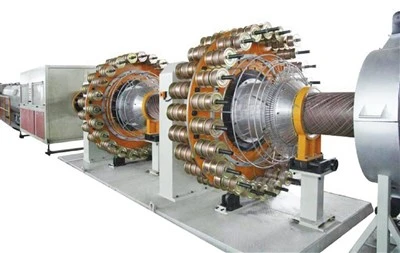
I know it’s easy to see pellets as just… pellets. Hard little compressed bits that look uniform, right? But the reality is way more dynamic. They’re the unsung workhorses of so many industries, solving problems that raw, unprocessed materials just can’t touch. Let’s break this down, from the sectors you might expect to the ones that’ll surprise you, all from the perspective of someone who’s installed pelletizing lines in 17 different countries over the last decade.
First, let’s start with the heavyweight: biomass energy. If you’ve ever walked past a power plant that smells like pine and wood, or filled your backyard pellet stove to heat your home, you’ve used these pellets. Raw wood waste—chips, sawdust, bark, even forest thinnings that would otherwise rot or be burned openly—can’t be stored or transported efficiently. It’s bulky, unevenly sized, and releases way more smoke when burned. A good pelletizing line compresses that raw biomass under high pressure (no binders needed, by the way—just lignin from the wood itself acting as a glue) into 6mm or 8mm pellets that are the size of a standard pencil eraser.
The application here isn’t just residential home heating. Utility-scale power plants in the EU and parts of the U.S. have swapped up to 30% of their coal fuel for wood pellets, because they’re a low-carbon alternative (the carbon released when burning them is the same carbon the tree absorbed while growing, so it’s carbon-neutral if sourced sustainably). I remember installing a pelletizing line for a 500,000-ton-per-year plant in Georgia a few years back—they turned logging residues that would’ve been left in the woods into pellets shipped to a power plant in Denmark. That project cut their waste disposal costs by 70% and helped the power plant meet EU emissions targets. Even small-scale off-grid communities in places like Kenya use biomass pellets for cooking, replacing charcoal which is both expensive and contributes to deforestation. That’s the power of a single pelletizing line turning waste into a reliable energy source.
Next up, fertilizer and agriculture—this is where I’ve seen the most innovation in the last five years. Granular fertilizers have been around forever, but pellets have changed the game for precision farming. Straight nitrogen, phosphorus, potassium (NPK) fertilizers are often dusty, hard to spread evenly, and can wash away in heavy rain, leading to runoff that pollutes rivers and lakes. When you run powdered fertilizer through a pelletizing line, you get dense, uniform pellets that flow like sand, don’t create dust, and can be coated with slow-release polymers. That means nutrients are released over 3-6 months instead of all at once, so farmers use 20-30% less fertilizer and get higher crop yields.
But it’s not just synthetic fertilizers. Organic pellets made from chicken manure, food waste compost, and crop residues are huge right now, too. I worked with a group of organic vegetable farmers in Iowa who were struggling to move their compost because it was lumpy and inconsistent. We installed a small, modular pelletizing line for their co-op, and within a year, they were supplying pelletized organic fertilizer to 12 regional grocery store farms and a major organic tomato producer. The pellets were easy to spread with automated equipment, no clumps to clog their sprayers, and the organic certification carried over because we didn’t add any synthetic binders. Even animal feed uses pellets—wait, yes, that’s a whole separate sector. Livestock and aquaculture feed pellets are one of the largest uses for fertilizer-grade pelletizing lines, actually. Raw grain, soy meal, and vitamins mixed together would separate in transit, leading to some animals getting too much protein and others not enough. Pelletizing compacts the mix into dense pellets that stay intact in storage, are easy for pigs, chickens, and even tilapia to eat, and reduce feed waste by up to 15%. That’s a big deal for feed mills, especially as demand for aquaculture grows globally to feed our growing population.
Now, let’s talk about the less obvious applications—this is where my favorite stories come from. Plastic pellets, for recycling, is a massive one most people don’t realize. The plastic industry generates millions of tons of post-industrial and post-consumer plastic waste every year: plastic film from packaging, HDPE jugs, PET bottles, even fishing nets. Melting this down and turning it back into usable plastic is tricky because the plastic is often different grades and sizes, so it’s hard to extrude consistently. A specialized pelletizing line for plastic takes that sorted plastic waste, washes it, shreds it, melts it, and extrudes it into uniform plastic pellets that are the exact same size and shape as virgin plastic pellets. These are then used to make new packaging, garden furniture, even playground equipment. I installed a plastic pelletizing line for a recycling company in Oregon that was collecting fishing nets from the Pacific Coast. Before the line, they had to ship the nets to Asia for processing, which cost $200 a ton. Now, they process 10,000 tons of nets a year into pellets sold to a company that makes park benches, cutting their costs by 80% and creating local jobs. That’s circular economy at work, right there, thanks to pelletizing.
Another surprising use is in construction materials. Wood-plastic composite (WPC) pellets are a game-changer for decking, siding, and window frames. WPC is made by mixing wood fiber with recycled plastic, then extruding it into profiles—but first, you need to turn the raw wood and plastic into uniform pellets that can be fed into the extruder smoothly. Without a pelletizing line, the mix would be inconsistent, leading to weak deck boards that crack or warp. WPC pellets made from our lines are used by companies like Trex and others to make eco-friendly decking that lasts 25 years or more, doesn’t rot, and doesn’t need painting. I even worked with a small construction supply company in Canada that started making WPC pellets from their construction wood waste and plastic wrap, and now sells pellets to other small builders who want to make their own decking on-site. That’s a great example of how pelletizing lines don’t just serve big companies—they empower small, local businesses too.
Wait, let’s not forget pharmaceuticals and cosmetics. Yeah, you read that right. Pellets are used in controlled-release medication, especially for oral drugs. Instead of taking a pill that releases all its medicine at once, which can cause side effects or wear off too quickly, drugs are made into tiny pellets coated with a time-released polymer. These pellets are then put into a capsule, so they release the medication slowly over 8 or 12 hours, meaning patients only have to take one dose a day. The pelletizing process here is super precise—we’ve installed lines for pharmaceutical manufacturers that produce pellets as small as 0.5mm, with consistent size within 0.1mm, because even tiny variations can affect how the drug dissolves. I won’t name names, but one of the big generic drug companies uses our lines to make pellets for their blood pressure medication, which saves patients thousands of dollars a year compared to brand-name versions. It’s a whole different world from biomass pellets, but the core technology—compressing material into uniform, flowable bits—works exactly the same.
Now, I want to address a common concern I hear from people looking at pelletizing lines: “Is the quality consistent?” For years, a lot of low-quality pelletizing lines out there made pellets that crumbled, had inconsistent density, or required expensive binders. That’s why I focused on building lines that use high-pressure roller systems, not just die extrusion, so that the natural binders in organic materials (lignin, starch) are enough to hold pellets together without additives. For plastic pellets, our lines use a consistent heating and cutting system that keeps pellet size variation below 2%, which is a big deal for downstream processing. I always tell customers that the best application for a pelletizing line is whatever fits their raw material—whether they’re turning wood waste into energy, manure into fertilizer, or plastic bottles into furniture, the line’s job is to take a messy, low-value input and turn it into a uniform, high-value output.
I also can’t talk about applications without mentioning the renewable energy transition. Countries around the world are phasing out coal, and pellets are a key part of the transition because they’re a dispatchable energy source—you can store them for long periods, unlike wind or solar which are intermittent. Last year, a utility company in the UK told me they switched 20% of their coal to wood pellets from a line we installed, and that reduced their carbon emissions by 1.2 million tons a year. That’s not just a number—that’s the equivalent of taking 260,000 cars off the road. It’s tangible impact, and that’s why I love what I do.
But here’s the thing: the application scope is only limited by what you can put through a pelletizing line. I’ve talked to a startup in Germany that’s testing pelletizing mushroom substrate waste to make animal bedding. Mushroom growers have tons of spent substrate that’s hard to dispose of—they’re turning it into pellets that are absorbent, don’t create dust, and last longer than straw bedding. That’s a new application that didn’t exist five years ago, and it’s all because pelletizing technology is getting more flexible. Modular lines now can switch between different raw materials in a matter of hours, not days, so small businesses can test new applications without investing in a whole new line.
Now, if you’re reading this, chances are you’re either someone who’s sitting on a pile of waste that’s costing you money to dispose of, or someone who’s looking to improve their product’s quality and reduce costs. Maybe you’re a feed mill struggling with dusty grain, a farm with manure piling up, a recycling company with plastic waste they can’t process locally, or a utility looking for a low-carbon fuel source. Whatever the case, the right pelletizing line can turn that problem into a profit center.
I’ve been in this business long enough to know that choosing the right pelletizing line isn’t just about buying a machine—it’s about matching it to your specific raw material, production volume, and end product. Some customers need a small 1-ton-per-hour line for a local farm, others need a 50-ton-per-hour line for a power plant. That’s why we work with every customer to do a raw material test first—bring us your waste or raw material, we run it through our demo line, show you the pellet quality, production rate, and cost, so you know exactly what you’re getting before you make any investment.

If you’re tired of dealing with waste that’s sitting on your books as a liability, or if you want to improve your product’s consistency and reduce your operational costs, let’s talk. I’ve seen what pelletizing lines can do for all kinds of businesses, from small family farms to Fortune 500 companies, and I’d be happy to walk through your specific needs and show you how a pelletizing line could work for you. There’s no one-size-fits-all solution, but there’s almost always a solution that fits your raw material and your goals.
Pipe Extrusion Line References:
- Biomass Energy Association. (2022). Global Wood Pellet Market Report: Supply, Demand, and Emission Impacts.
- International Fertilizer Industry Association. (2023). Slow-Release Fertilizers: Precision Agriculture’s Key to Nutrient Efficiency.
- American Plastics Council. (2021). Recycling of Post-Consumer Plastic Waste via Pelletizing and Upcycling.
- World Health Organization. (2020). Controlled-Release Pharmaceutical Pellets: Manufacturing and Clinical Applications.
- Food and Agriculture Organization of the United Nations. (2022). Global Aquafeed Market Growth and Efficiency Improvements via Pelletization.
Zhejiang Jwell Pipe Equipment Co., Ltd.
As one of the most professional pelletizing line manufacturers and suppliers in China, we’re featured by quality products and good price. Please rest assured to buy cheap pelletizing line in stock here from our factory. Customized orders are welcome.
Address: No.128 Qingfeng Road, Xieqiao Town, Haining City, Jiaxing City, Zhejiang Province
E-mail: salaa@jwell.cn
WebSite: https://www.jwell-pipe.com/
